Brazil and India Forge Deeper Strategic Ties Amid Shifting Global Dynamics, Says Foreign Minister Mauro Vieira
World Pulse Editorial — The WORLD PULSE editorial team covers international news, business, technology, AI, science, sport, culture and other subjects of public interest. The desk applies source attribution, editorial checks, context and corrections standards across the publication.
The byline identifies the newsroom author or editorial team responsible for this publication. Where the story is based on external reporting, those sources are identified below.
AI-assisted production may have been used in the drafting workflow. Source verification, attribution and editorial review remain the responsibility of WORLD PULSE.
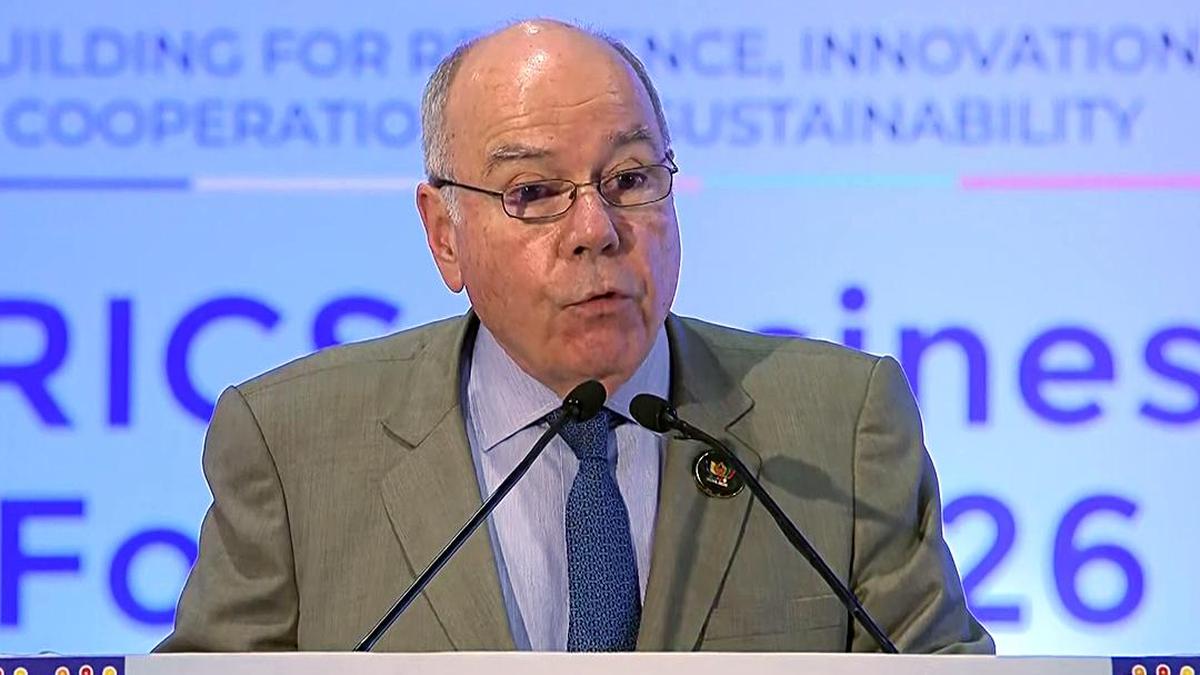
Brazilian Foreign Minister Mauro Vieira highlighted strengthening economic and political ties between Brazil and India during a recent interview in New Delhi, projecting that bilateral trade could surpass $30 billion well ahead of 2030.
Brazil and India are actively building robust strategic partnerships to navigate a changing global landscape, according to Brazilian Foreign Minister Mauro Vieira. Speaking during an interview in New Delhi, the visiting diplomat praised India's stewardship of its BRICS presidency and emphasized that bilateral economic exchanges are expanding at a rapid pace. Vieira noted that the official goal set by Brazilian President Luiz Inácio Lula da Silva and Indian Prime Minister Narendra Modi to achieve $30 billion in bilateral trade by 2030 could be met much earlier than anticipated.
Bilateral trade figures have climbed significantly in recent years. After registering around $15 billion last year, current projections indicate trade volumes should reach approximately $20 billion. Major Brazilian corporations, including state-run oil giant Petrobras, aerospace firm Embraer, engineering conglomerate WEG, and mining giant Vale, are heavily engaged in the Indian market. Embraer, in particular, maintains strong commercial and defense interests in India, pursuing opportunities with aircraft such as the KC-390 and Super Tucano. Vieira pointed out that discussions involving these key enterprises could accelerate commercial growth and push overall trade past the $30 billion benchmark well before the end of the decade.
Addressing multilateral cooperation, Vieira discussed the transition of leadership within BRICS and underscored the value of continued policy coordination between members that also sit on the G20. He highlighted the ongoing development of the New Development Bank, describing the institution as a faster, more agile alternative to 80-year-old Bretton Woods organizations like the World Bank and the International Monetary Fund. According to Vieira, the BRICS bank provides developing nations with a more accessible funding mechanism under the direct control of its member states, aligning with broader goals to reform global governance.
Responding to queries regarding the geopolitical identity of the bloc, Vieira firmly rejected the notion that BRICS functions as an anti-Western or anti-American coalition. He characterized the group as a constructive platform for negotiation, dialogue, and consensus-building rather than an adversarial alliance. On the subject of de-dollarization, Vieira clarified that BRICS is not attempting to replace the U.S. dollar. The potential adoption of local currencies for settling fractions of bilateral trade is a standard practice utilized globally by numerous nations, driven primarily by private sector choices rather than direct government mandates.
The foreign minister also addressed the attendance of key global leaders at the summit, including Chinese President Xi Jinping and Russian President Vladimir Putin. Vieira observed that President Xi's presence highlights Beijing's commitment to the organization, while noting that BRICS offers an informal and proximate setting for nations with differing viewpoints to engage in direct dialogue. Similarly, he emphasized India's deep, historical political and strategic ties with Russia, illustrating how the coalition accommodates diverse major powers within the same multilateral framework.
Regarding the future composition of the bloc, Vieira suggested that BRICS is currently shifting its focus toward consolidation rather than immediate expansion. Following the initial integration of new members, such as Indonesia, the group lacks a permanent secretariat and relies on rotating presidencies to manage its agenda. As a result, current members are prioritizing the strengthening of internal cohesion and deepening engagement with partner countries before reopening future enlargement rounds. Before arriving in India, Vieira visited Singapore and Thailand as part of an overarching initiative to deepen Brazil's diplomatic and commercial footprint across Asia, highlighting Brazil's broader strategy to expand engagement with ASEAN nations.
Topic coverage
Follow recurring subjects across the WORLD PULSE newsroom.
Topics
Reader interest
Most read
 UKKelsey Parker Welcomes New Baby Named River Following Heartbreaking Stillbirth
 AIOpenAI Discloses New Safety Issues and Outlines Plan for Tracking Incidents
 SportsAsian Games Facing Accommodation Crisis and Weather Disruptions in Nagoya, Japan
More from the newsroom
Latest stories
 UKUK Defence Secretary Wes Streeting Urges Public Preparation for Cyber, Climate and Supply Chain Emergencies
 USAFederal Charges Filed Against Virginia State Senator L. Louise Lucas in Alleged Racketeering Scheme
 WorldRising Islamophobia and the Democratic Response to Attacks on Muslim Candidates
 ScienceGlobal Biodiversity Fund Faces Criticism as Pharmaceutical Contributions Stagnate at $7,000
 TechnologyMemphis City Council Rejects One-Year Data Center Moratorium in Favor of 135-Day Halt
 WorldDiplomatic and Military Developments in the Middle East: Iran, Russia, and Regional Security Updates
 WorldRubio Denounces Ukraine’s Claims of Withdrawn U.S. Support as ‘Scandalous’ Amid Oslo Diplomacy
 USATrump Administration Proposes Tying Federal Transit Funding to Local Birth and Marriage Rates
Research & context
Explore WORLD PULSE reference pages
Use these newsroom indexes to follow related coverage, review publication timelines and explore how WORLD PULSE reporting is organized.
Sources & attribution
The external reports, announcements or publications used to inform this article are listed here for attribution and reader context. A source link does not mean WORLD PULSE independently endorses every claim in that source.
Questions about sourcing, attribution or corrections: contact the newsroom.
