Decades-Old Lawn Marks Reveal Possible Foundations of Lost 18th-Century Building at English Estate
World Pulse Editorial — The WORLD PULSE editorial team covers international news, business, technology, AI, science, sport, culture and other subjects of public interest. The desk applies source attribution, editorial checks, context and corrections standards across the publication.
The byline identifies the newsroom author or editorial team responsible for this publication. Where the story is based on external reporting, those sources are identified below.
AI-assisted production may have been used in the drafting workflow. Source verification, attribution and editorial review remain the responsibility of WORLD PULSE.
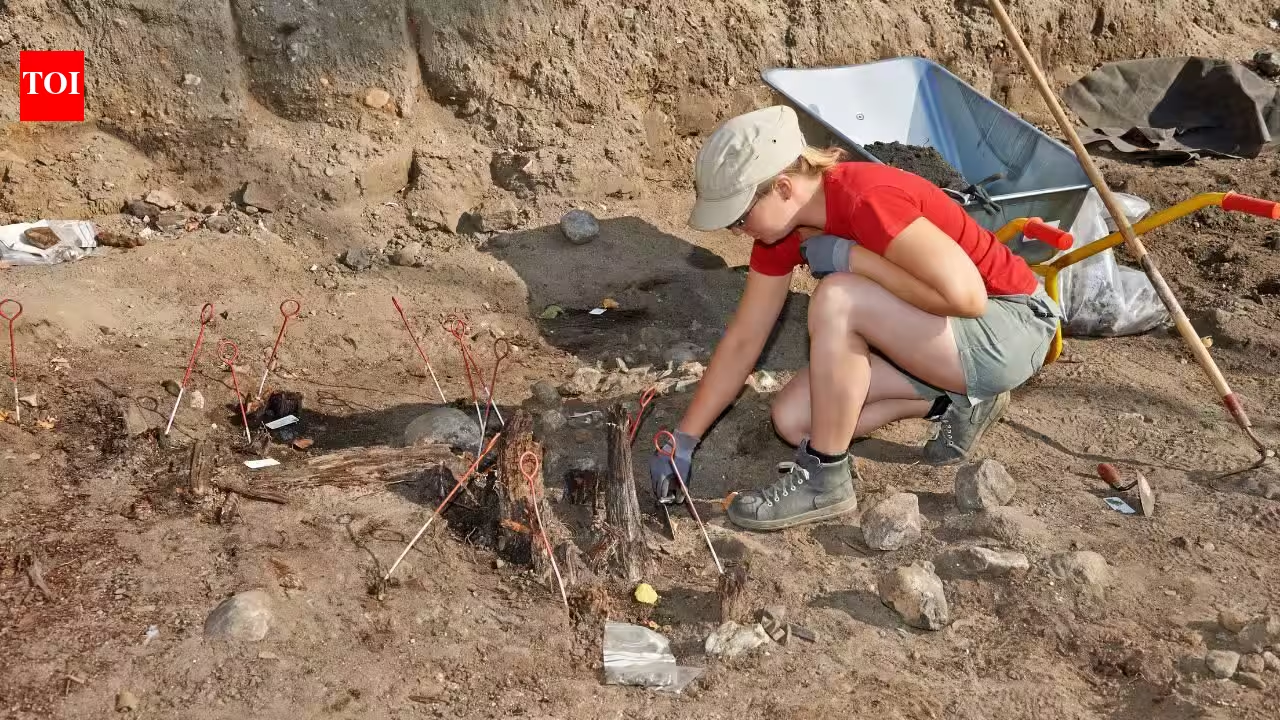
Thirty-one years after unusual marks appeared in a photograph of Temple Newsam in Leeds, archaeologists have uncovered foundations believed to belong to a lost 18th-century outbuilding.
More than three decades after strange patterns were captured on the lawns of a historic English estate, archaeologists have uncovered foundations that may belong to a lost 18th-century building. In the summer of 1995, local enthusiast Mike Turpin noticed unusual marks across the grass at Temple Newsam in Leeds, England. Suspecting the variations in the turf indicated buried structural remains, researchers and volunteers eventually launched a targeted excavation to test the theory.
According to reports from Discover Magazine and project findings, members of South Leeds Archaeology opened several trenches across the lawn where the 1995 photographic marks had appeared. Beneath the soil, the team uncovered stone foundations belonging to an outbuilding that appears to be more than 280 years old. The discovery indicates that the historic aerial and ground-level marks captured real archaeological features rather than random patterns in the vegetation.
The fieldwork was led by Jim Jackson and Phil Jones, who guide the volunteer-driven monthly group based in nearby Rothwell. By opening trenches across the site, the team examined soil layers and identified structural stones forming the base of the long-lost building. However, finding the foundations is only the first step; researchers must now establish the exact shape, extent, and chronology of the remains while comparing them with surviving historical documents.
The newly discovered remains have prompted a re-evaluation of an 18th-century painting depicting the estate. Dating from around 1750, the artwork shows a structure standing beside the property's existing stable block. For generations, historians assumed the painting captured a proposed renovation plan that was never actually carried out. The unearthing of physical foundations raises the distinct possibility that the artist portrayed a building that was genuinely constructed.
Despite this breakthrough, important questions remain. The archaeological team has not yet determined the exact function of the building, the full extent of its construction, or whether it was completed, altered, or demolished in stages. Estate buildings of this scale frequently underwent modifications as owners updated their homes, redesigned gardens, or adapted spaces for different domestic and agricultural needs.
In addition to the 18th-century outbuilding foundations, the excavation at Temple Newsam yielded a rich tapestry of artifacts from multiple eras. Archaeologists uncovered a lost road or carriageway north of the main house, fragments of a 16th-century fruit bowl, 18th-century window glass, and animal bones and oyster shells near the former kitchen areas. These items provide everyday details regarding diet, tableware, and how residents and staff interacted with the landscape.
Prehistoric evidence was also recovered from the site. Among the finds was an arrowhead estimated to be up to 5,000 years old, predating Temple Newsam House by millennia and illustrating that human activity occurred on the land long before the establishment of the formal estate. At the other end of the chronological spectrum, the team recovered modern leftovers associated with a 1990s music festival held on the grounds, demonstrating how quickly contemporary archaeological layers accumulate.
Temple Newsam House itself has stood for more than 500 years and counts prominent historical figures, including Lord Darnley, among its former residents. Today, the estate welcomes visitors to explore its preserved house, gardens, and rare-breed Home Farm, maintaining a vibrant connection between the public and the grounds' deep history.
South Leeds Archaeology hopes to return to the site for future excavation seasons to uncover more of the foundations and gather further clues concerning the building's purpose and relationship to the estate's broader layout. Researchers continue to review estate maps, building accounts, and historical documents to clarify the structure's place in local history. For now, the successful investigation of a decades-old photograph has restored a forgotten piece of architecture to Temple Newsam's complex story.
Topic coverage
Follow recurring subjects across the WORLD PULSE newsroom.
Topics
Reader interest
Most read
 UKKelsey Parker Welcomes New Baby Named River Following Heartbreaking Stillbirth
 AIOpenAI Discloses New Safety Issues and Outlines Plan for Tracking Incidents
 SportsAsian Games Facing Accommodation Crisis and Weather Disruptions in Nagoya, Japan
More from the newsroom
Latest stories
 UKUK Defence Secretary Wes Streeting Urges Public Preparation for Cyber, Climate and Supply Chain Emergencies
 USAFederal Charges Filed Against Virginia State Senator L. Louise Lucas in Alleged Racketeering Scheme
 WorldRising Islamophobia and the Democratic Response to Attacks on Muslim Candidates
 ScienceGlobal Biodiversity Fund Faces Criticism as Pharmaceutical Contributions Stagnate at $7,000
 TechnologyMemphis City Council Rejects One-Year Data Center Moratorium in Favor of 135-Day Halt
 WorldDiplomatic and Military Developments in the Middle East: Iran, Russia, and Regional Security Updates
 WorldRubio Denounces Ukraine’s Claims of Withdrawn U.S. Support as ‘Scandalous’ Amid Oslo Diplomacy
 USATrump Administration Proposes Tying Federal Transit Funding to Local Birth and Marriage Rates
Research & context
Explore WORLD PULSE reference pages
Use these newsroom indexes to follow related coverage, review publication timelines and explore how WORLD PULSE reporting is organized.
Sources & attribution
The external reports, announcements or publications used to inform this article are listed here for attribution and reader context. A source link does not mean WORLD PULSE independently endorses every claim in that source.
Questions about sourcing, attribution or corrections: contact the newsroom.
