German Chancellor Friedrich Merz Admits State Election 'Disaster' as Far-Right AfD Makes Strong Gains
World Pulse Editorial — The WORLD PULSE editorial team covers international news, business, technology, AI, science, sport, culture and other subjects of public interest. The desk applies source attribution, editorial checks, context and corrections standards across the publication.
The byline identifies the newsroom author or editorial team responsible for this publication. Where the story is based on external reporting, those sources are identified below.
AI-assisted production may have been used in the drafting workflow. Source verification, attribution and editorial review remain the responsibility of WORLD PULSE.
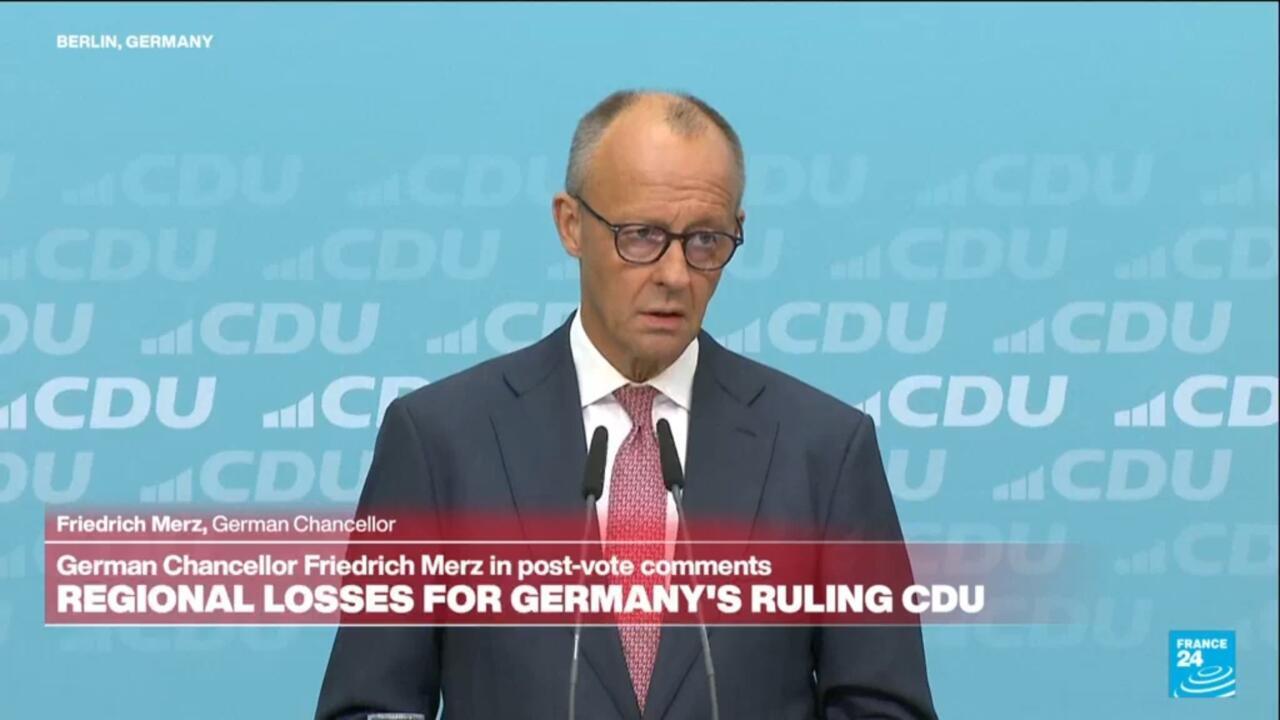
German Chancellor Friedrich Merz has vowed to press ahead with economic reforms despite heavy losses for his CDU party in two regional elections, where the far-right Alternative for Germany secured a leading position in Mecklenburg-Western Pomerania.
German Chancellor Friedrich Merz described his Christian Democratic Union party's heavy losses in two regional elections as a disaster, while vowing to push forward with a controversial reform agenda. According to exit polls published by public broadcasters ARD and ZDF, the far-right Alternative for Germany party took first place in the northeastern state of Mecklenburg-Western Pomerania, while also registering significant gains in a separate election in Berlin.
In Mecklenburg-Western Pomerania, the anti-migration and Russia-friendly AfD secured a narrow lead of approximately 37 percent, followed by the centre-left SPD with 35 percent. Meanwhile, Merz's CDU crashed below the 5 percent threshold in the former communist eastern German state, resulting in the party being completely ejected from the regional parliament. Public broadcasting coverage confirmed this marked the worst electoral result ever recorded for the CDU in the region.
Simultaneously, voters in Berlin delivered another stinging setback to the ruling establishment. The far-left Die Linke party easily defeated the CDU, capturing about 25 percent of the vote compared to 19 percent for the chancellor's party. Elif Eralp, Die Linke's lead candidate and the daughter of Turkish migrants, celebrated the outcome by declaring that love and justice had triumphed over hatred in the capital.
Speaking in a televised address after polls closed at 6:00 p.m. local time, Merz acknowledged the severity of the defeat in Mecklenburg-Western Pomerania. As both party leader and chancellor, he insisted that he intends to remain in office and accelerate potentially painful structural reforms designed to revitalize Europe's largest economy. Asserting his commitment to national leadership, Merz stated that the reforms must happen and emphasized that he is taking responsibility to move the country forward.
The regional votes arrived just two weeks after the AfD finished narrowly short of an absolute majority in the small eastern state of Saxony-Anhalt. That September 6 election positioned the far-right party with its strongest opportunity yet to form Germany's first regional government of its kind since the end of World War II, shocking many citizens who believed the nation had built robust immunities against nationalism through historical education and strict laws outlawing persecution.
Merz assumed the chancellorship 16 months ago at age 70, pledging to revitalize an economy that has stagnated with little growth for years. However, his administration has struggled to lift a sullen public mood, and the chancellor himself has experienced a significant decline in personal popularity.
The string of electoral setbacks has severely damaged Merz's political authority at the national level. Over the preceding two weeks, murmurs of discontent have emerged from within his own political ranks regarding his leadership, though top-tier allies have largely cautioned against internal personnel debates while backing his tenure.
To navigate the turbulent political fallout, Merz canceled a planned official trip to New York City where he was scheduled to attend the United Nations General Assembly. Despite facing strong political headwinds and mounting pressure from opposition victories, the chancellor has repeatedly affirmed his determination to remain in office and complete his governing term.
Topic coverage
Follow recurring subjects across the WORLD PULSE newsroom.
Topics
Reader interest
Most read
 UKKelsey Parker Welcomes New Baby Named River Following Heartbreaking Stillbirth
 AIOpenAI Discloses New Safety Issues and Outlines Plan for Tracking Incidents
 SportsAsian Games Facing Accommodation Crisis and Weather Disruptions in Nagoya, Japan
More from the newsroom
Latest stories
 UKUK Defence Secretary Wes Streeting Urges Public Preparation for Cyber, Climate and Supply Chain Emergencies
 USAFederal Charges Filed Against Virginia State Senator L. Louise Lucas in Alleged Racketeering Scheme
 WorldRising Islamophobia and the Democratic Response to Attacks on Muslim Candidates
 ScienceGlobal Biodiversity Fund Faces Criticism as Pharmaceutical Contributions Stagnate at $7,000
 TechnologyMemphis City Council Rejects One-Year Data Center Moratorium in Favor of 135-Day Halt
 WorldDiplomatic and Military Developments in the Middle East: Iran, Russia, and Regional Security Updates
 WorldRubio Denounces Ukraine’s Claims of Withdrawn U.S. Support as ‘Scandalous’ Amid Oslo Diplomacy
 USATrump Administration Proposes Tying Federal Transit Funding to Local Birth and Marriage Rates
Research & context
Explore WORLD PULSE reference pages
Use these newsroom indexes to follow related coverage, review publication timelines and explore how WORLD PULSE reporting is organized.
Sources & attribution
The external reports, announcements or publications used to inform this article are listed here for attribution and reader context. A source link does not mean WORLD PULSE independently endorses every claim in that source.
Questions about sourcing, attribution or corrections: contact the newsroom.
