How Captive-Bred Bilbies Colonized Thistle Island and Boosted Australia's Conservation Recovery Efforts
World Pulse Editorial — The WORLD PULSE editorial team covers international news, business, technology, AI, science, sport, culture and other subjects of public interest. The desk applies source attribution, editorial checks, context and corrections standards across the publication.
The byline identifies the newsroom author or editorial team responsible for this publication. Where the story is based on external reporting, those sources are identified below.
AI-assisted production may have been used in the drafting workflow. Source verification, attribution and editorial review remain the responsibility of WORLD PULSE.
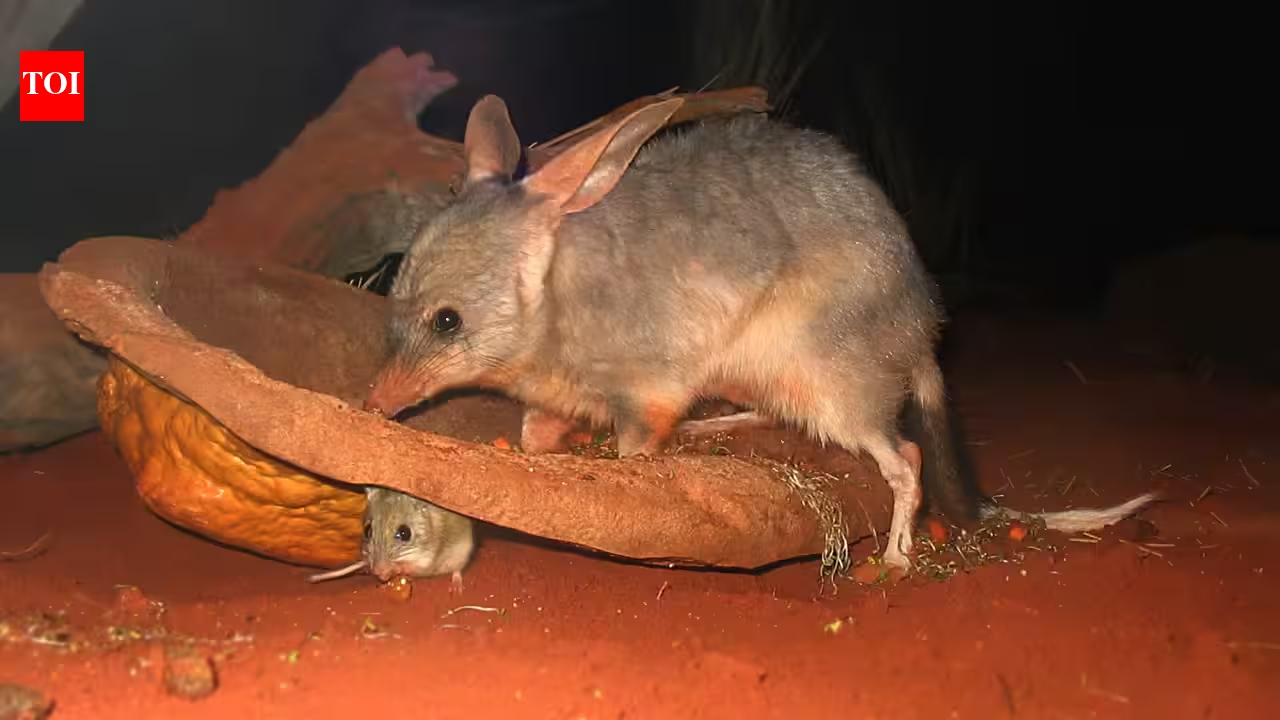
Decades after conservationists released captive-bred greater bilbies onto South Australia's Thistle Island, the marsupial population has successfully expanded across the entire area, highlighting broader conservation efforts nationwide.
In 1997, conservationists introduced captive-bred greater bilbies to Thistle Island off the coast of South Australia, establishing a population in a location the vulnerable marsupial had never historically inhabited. According to the Australian Government's Department of Climate Change, Energy, the Environment and Water recovery plan for the species, the release was designed to protect the vulnerable animals from mainland predators such as introduced foxes and feral cats. Surveys conducted approximately a decade later revealed that the bilbies had multiplied and successfully occupied the entire island.
The project on Thistle Island demonstrated how predator-free islands can support thriving populations of threatened species outside their former range. Because the island lacked mainland mammalian predators, the bilbies were able to establish colonies without the severe predation pressure that restricts mainland survival. Subsequent ecological research into the island's temperate-climate population recorded densities reaching as high as 101 bilbies per square kilometre, contrasting sharply with the 0 to 0.2 bilbies per square kilometre typically observed in arid-zone environments.
Similar reintroduction initiatives have taken place across Australia, including a multi-year effort at Matuwa in Western Australia. Jointly managed by the Department of Biodiversity, Conservation and Attractions alongside Martu Indigenous rangers, Matuwa underwent annual feral cat baiting, trapping, and fencing to exclude camels and domestic stock. Between 2007 and 2009, officials and rangers reintroduced 128 bilbies to the 2,500-square-kilometre area. Subsequent monitoring showed that the population spread throughout the intensively managed zone and expanded into adjacent lands, demonstrating that sustained predator management can support bilby recovery without total enclosure.
Beyond islands and managed open areas, conservation groups have established large fenced enclosures across the greater bilby's former range. These sites include Mallee Cliffs National Park, Arid Recovery Reserve, Francois Peron National Park, Scotia Sanctuary, Yookamurra Sanctuary, Mt Gibson Sanctuary, Currawinya National Park, Pilliga State Conservation Area, Sturt National Park, and Newhaven Sanctuary. Some of these fenced reserves cover up to 262,000 hectares, keeping introduced predators at bay while allowing bilbies to experience natural selection pressures. The combined population across these protected reintroduction sites is estimated at approximately 3,000 individuals, helping restore ecological functions like soil turnover and maintaining genetic diversity.
Despite these conservation milestones, the greater bilby remains officially classified as vulnerable under the Environment Protection and Biodiversity Conservation Act 1999. The species' overall distribution has shrunk by more than 80 percent since European settlement, with remaining wild populations surviving mainly in the Northern Territory, northern Western Australia, and small, isolated pockets in Queensland. Ongoing threats to the species include continued predation by foxes and feral cats, habitat destruction, altered fire patterns, and reductions in traditional land management practices.
More recent census data point to broader momentum across the species' recovery network. The Australian Wildlife Conservancy's annual bilby census across protected sanctuaries in Western Australia, the Northern Territory, South Australia, and New South Wales recorded a total population of 5,330 individuals. This figure represents an increase of roughly 2,000 animals from the previous year and more than four times the tally recorded in 2021. Experts emphasize that while island populations and fenced sanctuaries serve vital safeguard functions, long-term survival on the Australian mainland depends on ongoing control of foxes and feral cats.
Topic coverage
Follow recurring subjects across the WORLD PULSE newsroom.
Topics
Reader interest
Most read
 UKKelsey Parker Welcomes New Baby Named River Following Heartbreaking Stillbirth
 AIOpenAI Discloses New Safety Issues and Outlines Plan for Tracking Incidents
 SportsAsian Games Facing Accommodation Crisis and Weather Disruptions in Nagoya, Japan
More from the newsroom
Latest stories
 UKUK Defence Secretary Wes Streeting Urges Public Preparation for Cyber, Climate and Supply Chain Emergencies
 USAFederal Charges Filed Against Virginia State Senator L. Louise Lucas in Alleged Racketeering Scheme
 WorldRising Islamophobia and the Democratic Response to Attacks on Muslim Candidates
 ScienceGlobal Biodiversity Fund Faces Criticism as Pharmaceutical Contributions Stagnate at $7,000
 TechnologyMemphis City Council Rejects One-Year Data Center Moratorium in Favor of 135-Day Halt
 WorldDiplomatic and Military Developments in the Middle East: Iran, Russia, and Regional Security Updates
 WorldRubio Denounces Ukraine’s Claims of Withdrawn U.S. Support as ‘Scandalous’ Amid Oslo Diplomacy
 USATrump Administration Proposes Tying Federal Transit Funding to Local Birth and Marriage Rates
Research & context
Explore WORLD PULSE reference pages
Use these newsroom indexes to follow related coverage, review publication timelines and explore how WORLD PULSE reporting is organized.
Sources & attribution
The external reports, announcements or publications used to inform this article are listed here for attribution and reader context. A source link does not mean WORLD PULSE independently endorses every claim in that source.
Questions about sourcing, attribution or corrections: contact the newsroom.
