Montana Family Permanently Protects 57 Acres Along Stillwater River After Wildlife Documentation
World Pulse Editorial — The WORLD PULSE editorial team covers international news, business, technology, AI, science, sport, culture and other subjects of public interest. The desk applies source attribution, editorial checks, context and corrections standards across the publication.
The byline identifies the newsroom author or editorial team responsible for this publication. Where the story is based on external reporting, those sources are identified below.
AI-assisted production may have been used in the drafting workflow. Source verification, attribution and editorial review remain the responsibility of WORLD PULSE.
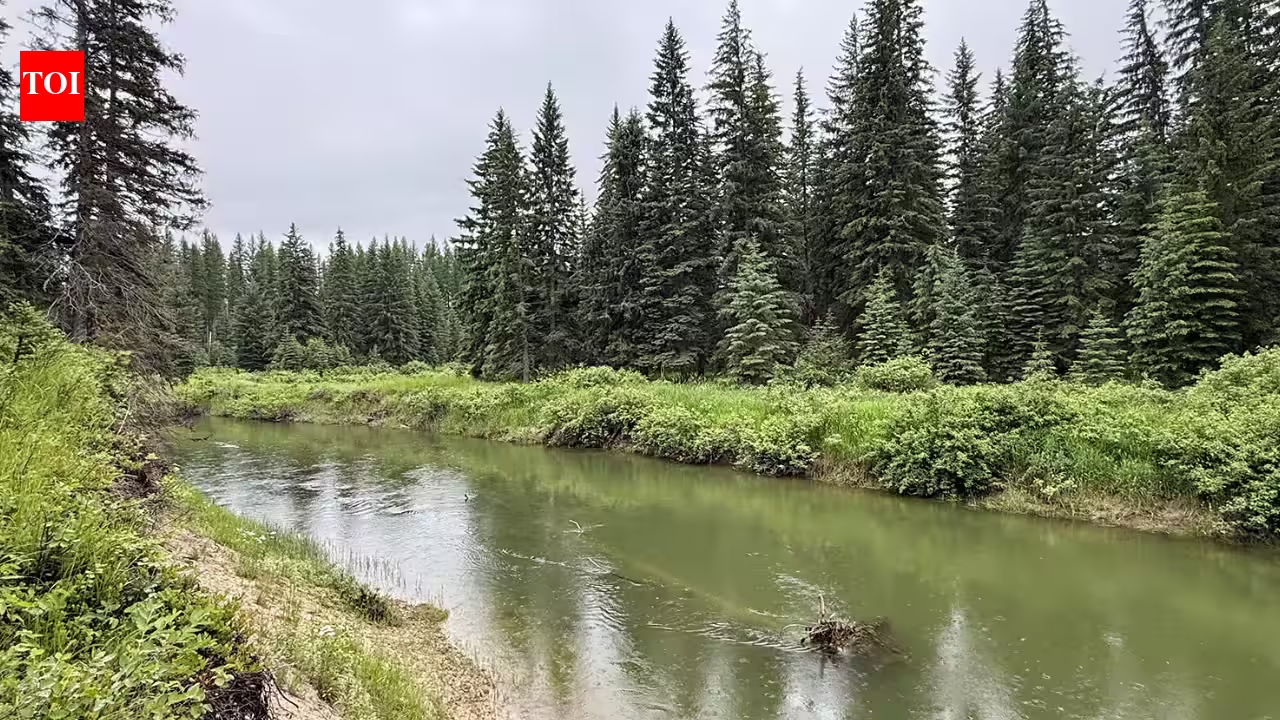
A Montana family has secured 57 acres of riverfront land along the Stillwater River under a permanent conservation easement following years of wildlife monitoring.
A Montana family has permanently protected 57 acres of riverfront terrain along the Stillwater River, securing a vital habitat corridor after years of documenting local wildlife. According to details confirmed by the Flathead Land Trust and reported by regional outlets like the Flathead Beacon and Whitefish Pilot, the conservation easement ensures the land will remain free from future subdivision and development.
The property was originally purchased in 2003 by Sean and Melodye Rooney alongside Sean’s parents. The family eventually became the sole owners of the tract, which is located west of Whitefish and stretches across nearly a mile of frontage along the Stillwater River. Under the new conservation agreement, the family retains ownership and will continue to live on and use the land, while the easement permanently restricts intensive development.
A significant portion of the acreage remains dedicated to active hay production, while the remainder encompasses diverse natural environments, including riparian forests, shrublands, and wetlands. This mix of working agricultural land and wild habitat supports a wide variety of native species, making the property a critical component of the broader Stillwater River ecosystem.
The conservation value of the property came into sharp focus through long-term wildlife monitoring conducted by the family. Camera traps positioned across the acreage have captured a diverse range of animals utilizing the corridor, including grizzly bears, black bears, mountain lions, gray wolves, moose, river otters, and bald eagles. These observations provided concrete evidence that large mammals routinely share the landscape.
In addition to private family monitoring, the property serves as an official study site for Snapshot USA, a nationwide camera-trapping initiative that monitors mammal populations and distributions across the United States. The program is coordinated nationally by the Smithsonian’s National Zoo and Conservation Biology Institute alongside various partners. Brigit Rooney, the daughter of Sean and Melodye, serves as the survey's coordinator and contributed as a co-author to the 2026 research covering the project's sixth year of data collection.
The newly established easement also reinforces ecological protections along the Stillwater River itself. Wetlands and riverfront vegetation on the parcel play an essential role in regulating the surrounding environment and provide designated habitat for aquatic species such as bull trout and westslope cutthroat trout, as noted by the Flathead Land Trust.
Geographically, the 57-acre tract connects directly with two pre-existing conservation easements as well as nearby lands managed by the U.S. Forest Service and the Stillwater State Forest. This adjacency helps stitch together a larger, unbroken network of protected open space along the river corridor, safeguarding regional biodiversity against encroaching human expansion.
The family’s commitment to the land extends to active restoration efforts. In 2025, the Rooneys launched a habitat improvement project designed to restore a ponded section and its associated wetland ecosystem on the property, further enhancing its ecological value.
The Rooneys hold deep historical ties to the Flathead Valley. Sean’s grandfather originally homesteaded near Cut Bank before working for the Great Northern Railway in Whitefish, and his father later settled in the valley to teach English and geology at Flathead Valley Community College. This deep-rooted history underpins the family's transition from landowners to permanent stewards of the landscape.
Ultimately, the conservation agreement transforms decades of casual observation and scientific monitoring into a legally binding commitment. As surrounding areas undergo development and landscape pressures mount, the easement ensures that this 57-acre corridor of working agricultural land, river frontage, and wildlife habitat will remain intact for future generations.
Topic coverage
Follow recurring subjects across the WORLD PULSE newsroom.
Topics
Reader interest
Most read
 UKKelsey Parker Welcomes New Baby Named River Following Heartbreaking Stillbirth
 AIOpenAI Discloses New Safety Issues and Outlines Plan for Tracking Incidents
 SportsAsian Games Facing Accommodation Crisis and Weather Disruptions in Nagoya, Japan
More from the newsroom
Latest stories
 UKUK Defence Secretary Wes Streeting Urges Public Preparation for Cyber, Climate and Supply Chain Emergencies
 USAFederal Charges Filed Against Virginia State Senator L. Louise Lucas in Alleged Racketeering Scheme
 WorldRising Islamophobia and the Democratic Response to Attacks on Muslim Candidates
 ScienceGlobal Biodiversity Fund Faces Criticism as Pharmaceutical Contributions Stagnate at $7,000
 TechnologyMemphis City Council Rejects One-Year Data Center Moratorium in Favor of 135-Day Halt
 WorldDiplomatic and Military Developments in the Middle East: Iran, Russia, and Regional Security Updates
 WorldRubio Denounces Ukraine’s Claims of Withdrawn U.S. Support as ‘Scandalous’ Amid Oslo Diplomacy
 USATrump Administration Proposes Tying Federal Transit Funding to Local Birth and Marriage Rates
Research & context
Explore WORLD PULSE reference pages
Use these newsroom indexes to follow related coverage, review publication timelines and explore how WORLD PULSE reporting is organized.
Sources & attribution
The external reports, announcements or publications used to inform this article are listed here for attribution and reader context. A source link does not mean WORLD PULSE independently endorses every claim in that source.
Questions about sourcing, attribution or corrections: contact the newsroom.
