Rare 16th-Century Aztec Codex Returns to Mexico on Loan From France After Nearly Two Centuries
World Pulse Editorial — The WORLD PULSE editorial team covers international news, business, technology, AI, science, sport, culture and other subjects of public interest. The desk applies source attribution, editorial checks, context and corrections standards across the publication.
The byline identifies the newsroom author or editorial team responsible for this publication. Where the story is based on external reporting, those sources are identified below.
AI-assisted production may have been used in the drafting workflow. Source verification, attribution and editorial review remain the responsibility of WORLD PULSE.
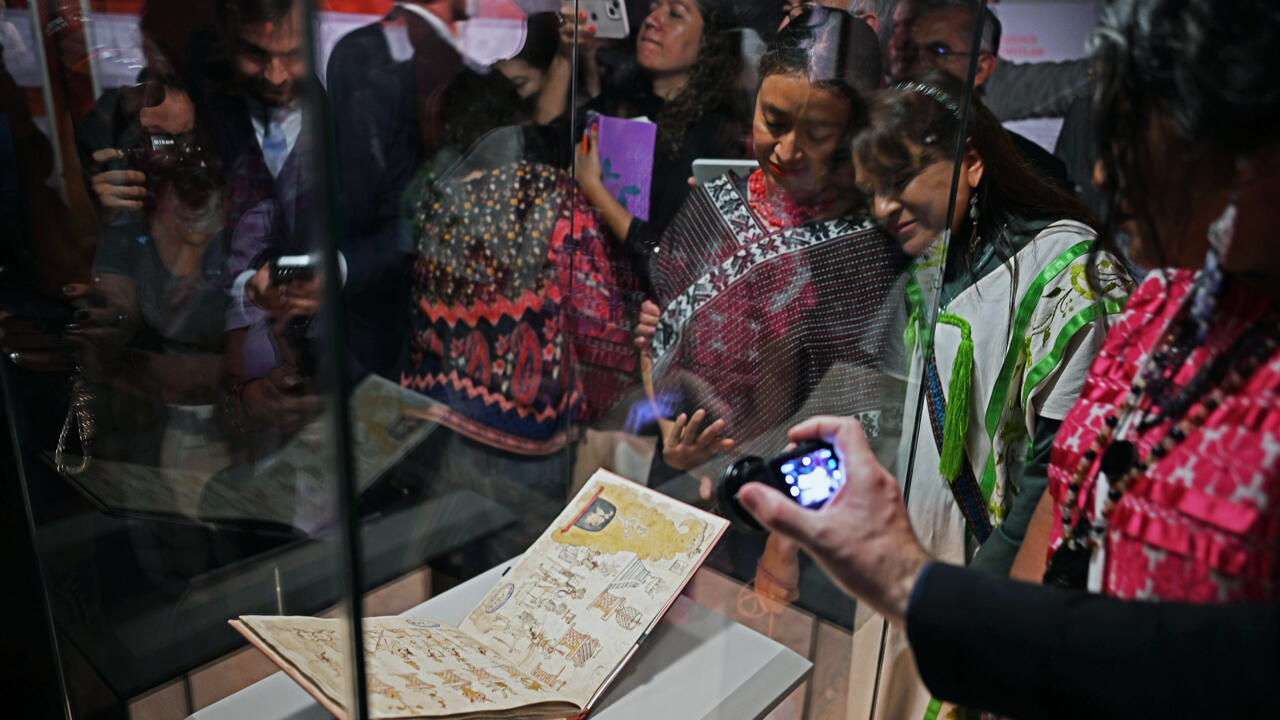
A prized 16th-century manuscript chronicling the Aztec Empire has gone on display at the National Museum of Anthropology in Mexico City on loan from France, as Mexico continues pressing for its permanent return.
A prized 16th-century manuscript chronicling the rise and fall of the Aztec Empire has gone on display in Mexico City, nearly two centuries after it was taken to France. The exhibition of the Codex Azcatitlan marks a rare temporary return of the historic document, while Mexican authorities and Indigenous groups continue to press Paris for its permanent restitution.
The artifact was unveiled inside a glass case at the National Museum of Anthropology. The manuscript recounts the history of the Aztec civilization through pictograms, detailing the journey from the mythical birthplace of Aztlan to the founding of Tenochtitlan—the forerunner of modern Mexico City—and continuing through the Spanish conquest and the arrival of Christianity.
Measuring 25 sheets of European-imported parchment, the codex features vivid scenes rendered in reds, blues, greens, and yellows, depicting warriors in feathered headdresses and ritual ceremonies inside pyramid temples. It is widely considered by historians to be one of the most important surviving accounts of early Aztec culture and life.
France's National Library, which has maintained possession of the manuscript for over a century, loaned the document to Mexico to commemorate 200 years of diplomatic relations between the two nations. However, the temporary loan has reignited calls from Mexican officials and cultural advocates for a permanent transfer. During a visit to Mexico last year, Mexican President Claudia Sheinbaum pressed French President Emmanuel Macron to return both the Codex Azcatitlan and another prominent text, the Codex Borbonicus.
At the exhibition opening, members of local Indigenous communities and cultural advocates expressed mixed emotions over the temporary display. Emilia Mendoza of the Hnahnu community reacted enthusiastically to seeing the folios, describing the exhibition as a first step toward broader restitution. Foreign Minister Roberto Velasco spoke at the inauguration, framing the event as an opportunity to reunite the population with its collective memory and noting that the pictograms represent the deep roots of Mexican identity.
The manuscript arrived in France in the 19th century, brought over by French researcher Joseph Marius Alexis Aubin, who specialized in Indigenous American cultures. It was later donated to the National Library of France in 1898 by the widow of Franco-Mexican collector Eugène Goupil. Along with the Codex Borbonicus—which is kept at the library of the French parliament's lower house, the National Assembly—the Codex Azcatitlan remains one of two major illustrated volumes of Indigenous Aztec heritage housed in France. Both French institutions maintain that they are the rightful owners of the manuscripts.
The exhibition comes amid a broader national push by Mexico to recover colonial-era cultural artifacts held abroad. According to the National Institute of Anthropology and History, more than 16,200 items have been repatriated to Mexico from various countries since 2018. The ongoing debate over the artifacts also carries a history of friction; in 1982, diplomatic tensions flared when a Mexican lawyer took the Codex Tonalamatl from France's National Library and returned it to Mexico, an action that drew anger from French authorities but celebration in Mexico.
As visitors view the Codex Azcatitlan during its limited exhibition run in Mexico City, questions regarding the ultimate ownership of colonial-era heritage items remain central to cultural discussions between Mexico and France.
Topic coverage
Follow recurring subjects across the WORLD PULSE newsroom.
Topics
Developing story
Follow the latest developments
Recent WORLD PULSE coverage with overlapping event terms is grouped here so readers can follow how the story is developing.
Reader interest
Most read
 UKKelsey Parker Welcomes New Baby Named River Following Heartbreaking Stillbirth
 AIOpenAI Discloses New Safety Issues and Outlines Plan for Tracking Incidents
 SportsAsian Games Facing Accommodation Crisis and Weather Disruptions in Nagoya, Japan
More from the newsroom
Latest stories
 UKUK Defence Secretary Wes Streeting Urges Public Preparation for Cyber, Climate and Supply Chain Emergencies
 USAFederal Charges Filed Against Virginia State Senator L. Louise Lucas in Alleged Racketeering Scheme
 WorldRising Islamophobia and the Democratic Response to Attacks on Muslim Candidates
 ScienceGlobal Biodiversity Fund Faces Criticism as Pharmaceutical Contributions Stagnate at $7,000
 TechnologyMemphis City Council Rejects One-Year Data Center Moratorium in Favor of 135-Day Halt
 WorldDiplomatic and Military Developments in the Middle East: Iran, Russia, and Regional Security Updates
 WorldRubio Denounces Ukraine’s Claims of Withdrawn U.S. Support as ‘Scandalous’ Amid Oslo Diplomacy
 USATrump Administration Proposes Tying Federal Transit Funding to Local Birth and Marriage Rates
Research & context
Explore WORLD PULSE reference pages
Use these newsroom indexes to follow related coverage, review publication timelines and explore how WORLD PULSE reporting is organized.
Sources & attribution
The external reports, announcements or publications used to inform this article are listed here for attribution and reader context. A source link does not mean WORLD PULSE independently endorses every claim in that source.
Questions about sourcing, attribution or corrections: contact the newsroom.
