Russian Election Observer Loses Consciousness During Police Arrest, Yabloko Party Says
World Pulse Editorial — The WORLD PULSE editorial team covers international news, business, technology, AI, science, sport, culture and other subjects of public interest. The desk applies source attribution, editorial checks, context and corrections standards across the publication.
The byline identifies the newsroom author or editorial team responsible for this publication. Where the story is based on external reporting, those sources are identified below.
AI-assisted production may have been used in the drafting workflow. Source verification, attribution and editorial review remain the responsibility of WORLD PULSE.
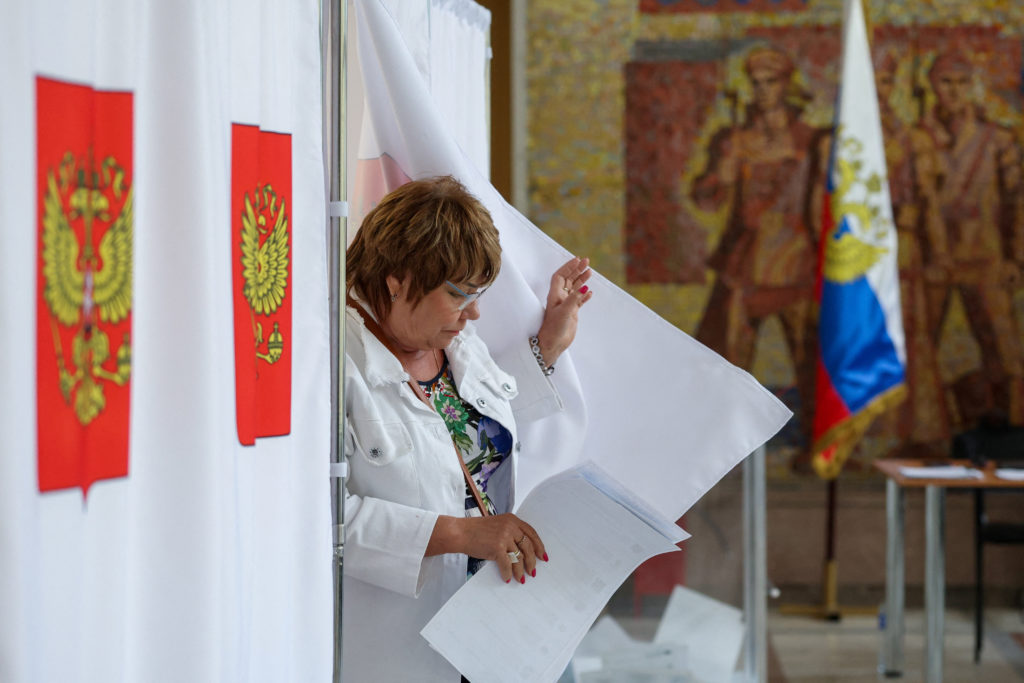
An election observer from Russia's liberal opposition Yabloko party reportedly lost consciousness while being detained by police at a St. Petersburg polling station during a tightly controlled parliamentary vote.
According to reports from the Associated Press based on statements from Russia's liberal opposition Yabloko party, an election observer lost consciousness while being arrested by police at a St. Petersburg polling station on Saturday. The incident occurred on the second day of a three-day parliamentary election for the State Duma, marking Russia's first national legislative vote since Moscow launched its full-scale invasion of Ukraine in February 2022.
Yabloko stated that officials at the polling station accused the observer of attempting to "disrupt the elections" and summoned law enforcement, who allegedly used force against him. The party reported on Telegram that it remained unclear whether the observer received prompt medical attention after falling unconscious. He was subsequently taken to a police station and charged with disobeying police orders. Russian officials did not immediately issue a public comment regarding the incident.
The parliamentary election, running from Friday through Sunday, features virtually no genuine opposition and is widely expected to secure the Kremlin's political dominance. Yabloko itself was largely barred from the ballot when Russia's Supreme Court removed the party last month. The party, which remains the only registered political entity to have criticized the war in Ukraine, is limited to a small number of candidates in single-constituency races. Furthermore, several anti-war politicians were imprisoned or forced to flee abroad prior to the campaign.
Both Yabloko and the Communist Party reported widespread restrictions and violations during the voting process. Many of their designated election observers were turned away from polling stations, while other reported irregularities included sealed ballot boxes being opened, refusals to issue paper ballots or provide turnout data for verification, and polling station doors left unsecured overnight. On Friday, Yabloko chairman Nikolai Rybakov appealed directly to Central Election Commission head Ella Pamfilova regarding the entry denials and pressure on observers, stating that the scale of the interference precluded dismissing it as a mere misunderstanding.
International scrutiny of the election has been notably limited. Russia declined to invite observers from the Organization for Security and Cooperation in Europe, with the Russian Foreign Ministry citing "double standards" due to past criticism from the organization. In response, OSCE Parliamentary Assembly President Pere Joan Pons condemned the exclusion, describing it as a breach of Russia's commitments as an OSCE member state and part of a worrying pattern of disregard for democratic accountability and the rule of law. Instead, Moscow invited other international organizations and observers from select OSCE member states.
According to Russia's Central Election Commission, more than 380,000 electoral observers were registered prior to the vote, representing 11 political parties, including 97,040 linked to the ruling United Russia party and 42,743 representing the Communist Party. Additionally, the commission reported 1,126 international observers and experts registered from 133 countries and 13 international organizations.
Ahead of the vote, Russian authorities implemented a new code of ethics that severely restricts observers, banning them from making statements that could be construed as undermining confidence in the electoral system. The election itself has been spread across three days, utilizing electronic balloting to boost turnout among the country's 111 million eligible voters.
Voting is also taking place in Crimea, illegally annexed by Russia in 2014, and for the first time includes residents of four Ukrainian regions that Moscow illegally annexed following the 2022 invasion, despite not exercising full military control over them. Analysts note that the Kremlin has sought to use the election to project public support for the war, eliminate remaining pockets of domestic dissent, and ensure that the ruling United Russia party retains overwhelming control of the State Duma alongside compliant systemic opposition parties.
Reference resource
Follow the wider WORLD PULSE timeline and related reporting for this continuing story.
Russia-Ukraine War Coverage & TimelineTopic coverage
Follow recurring subjects across the WORLD PULSE newsroom.
Topics
Developing story
Follow the latest developments
Recent WORLD PULSE coverage with overlapping event terms is grouped here so readers can follow how the story is developing.
Reader interest
Most read
 UKKelsey Parker Welcomes New Baby Named River Following Heartbreaking Stillbirth
 AIOpenAI Discloses New Safety Issues and Outlines Plan for Tracking Incidents
 SportsAsian Games Facing Accommodation Crisis and Weather Disruptions in Nagoya, Japan
More from the newsroom
Latest stories
 UKUK Defence Secretary Wes Streeting Urges Public Preparation for Cyber, Climate and Supply Chain Emergencies
 USAFederal Charges Filed Against Virginia State Senator L. Louise Lucas in Alleged Racketeering Scheme
 WorldRising Islamophobia and the Democratic Response to Attacks on Muslim Candidates
 ScienceGlobal Biodiversity Fund Faces Criticism as Pharmaceutical Contributions Stagnate at $7,000
 TechnologyMemphis City Council Rejects One-Year Data Center Moratorium in Favor of 135-Day Halt
 WorldDiplomatic and Military Developments in the Middle East: Iran, Russia, and Regional Security Updates
 WorldRubio Denounces Ukraine’s Claims of Withdrawn U.S. Support as ‘Scandalous’ Amid Oslo Diplomacy
 USATrump Administration Proposes Tying Federal Transit Funding to Local Birth and Marriage Rates
Research & context
Explore WORLD PULSE reference pages
Use these newsroom indexes to follow related coverage, review publication timelines and explore how WORLD PULSE reporting is organized.
Sources & attribution
The external reports, announcements or publications used to inform this article are listed here for attribution and reader context. A source link does not mean WORLD PULSE independently endorses every claim in that source.
Questions about sourcing, attribution or corrections: contact the newsroom.
