Trump Threatens European Union With Severe Tariffs Over Proposed Canada Association Plan
World Pulse Editorial — The WORLD PULSE editorial team covers international news, business, technology, AI, science, sport, culture and other subjects of public interest. The desk applies source attribution, editorial checks, context and corrections standards across the publication.
The byline identifies the newsroom author or editorial team responsible for this publication. Where the story is based on external reporting, those sources are identified below.
AI-assisted production may have been used in the drafting workflow. Source verification, attribution and editorial review remain the responsibility of WORLD PULSE.
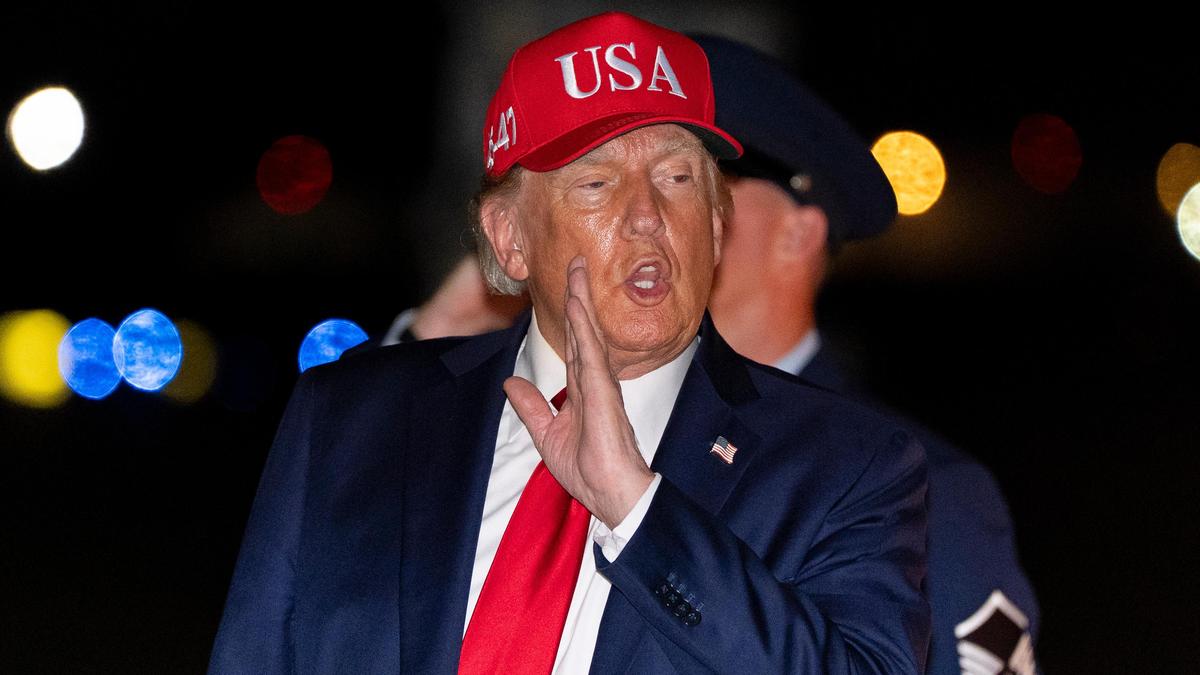
U.S. President Donald Trump has warned the European Union of heavy tariffs or halted trade if Brussels moves forward with a proposal to make Canada an associate member.
U.S. President Donald Trump issued a stern warning to the European Union on Wednesday, September 16, 2026, threatening to cut off trade or impose severe tariffs on the bloc. The reaction came in response to an initiative by the European Union to establish Canada as its first-ever associate member.
The prospect of closer institutional ties was raised by European Commission President Ursula von der Leyen just a day before Canadian leader Mark Carney was scheduled to address the European Parliament in Strasbourg. According to reports from Washington and Strasbourg, the overture arrives as both Ottawa and Brussels navigate an increasingly tense trade environment and pivot away from an aggressive United States under Trump's leadership.
Addressing reporters, President Trump dismissed the initiative initially, calling the plan "laughable." However, he quickly escalated his rhetoric regarding potential political motivations behind the alignment.
"If they do that, if I think it's at all a hostile act, I will put very serious tariffs or stop trading with Europe, on many things," Trump told reporters. He added a conditional caveat, noting that "if it's a good intention, that's fine. If it's a bad intention, we'll put very heavy tariffs on Europe, which is a possibility."
The friction stems from a high-profile diplomatic push by Ursula von der Leyen, who pitched deeper cooperation across technology, defense, and energy sectors to Canadian leader Mark Carney. Mr. Carney holds the distinction of becoming the first non-European head of government to attend the annual "State of the European Union" address.
Speaking before the European Parliament, Ms. Von der Leyen argued that democracies are currently facing a significant fracture within the international rules-based system, making it imperative for Brussels and Ottawa to forge closer bonds. Her proposal to open the door for Canada as the bloc's premier associate member drew an enthusiastic standing ovation within the parliamentary chamber.
The diplomatic outreach serves as a catalyst ahead of an upcoming EU-Canada summit scheduled to take place in Montreal the following month. Mr. Carney's visit to Europe coincides with a broader effort by Canadian leadership to secure alternative partnerships as Canada finds itself drawn deeper into an escalating trade war with the United States, which has included American tariffs and counter-tariffs ranging from 15% to 50% on U.S. goods.
Elaborating on the strategic vision, Von der Leyen emphasized a transition from traditional trade-based cooperation to a comprehensive "alliance for the future" designed to elevate the bilateral relationship to its highest possible tier. Specific areas targeted for joint integration include intelligent manufacturing, a dedicated technology alliance, combined defense industrial bases, and a flagship joint initiative focused on the Arctic region.
Additional fields slated for bilateral cooperation encompass energy supplies, critical minerals, advanced batteries, artificial intelligence, cybersecurity, and overall economic security. Despite the potential for friction with Washington, the EU chief insisted that the partnership is "not against anyone else, but for our common strength."
Both Canada and the European Union have faced external pressures, including economic buffeting from U.S. tariffs, territorial threats, and commercial competition from China. In response to the shifting global landscape, a statement issued by Mr. Carney's office underscored the necessity of the diplomatic pivot, noting that "in a more dangerous and divided world, Canada is forging stronger relationships with trusted partners."
Mr. Carney is scheduled to deliver his formal address to the European Parliament on Thursday, September 17, 2026, where lawmakers and international observers expect further details on how Ottawa and Brussels intend to advance their proposed association framework despite opposition from Washington.
Topic coverage
Follow recurring subjects across the WORLD PULSE newsroom.
Topics
Reader interest
Most read
 UKKelsey Parker Welcomes New Baby Named River Following Heartbreaking Stillbirth
 AIOpenAI Discloses New Safety Issues and Outlines Plan for Tracking Incidents
 SportsAsian Games Facing Accommodation Crisis and Weather Disruptions in Nagoya, Japan
More from the newsroom
Latest stories
 UKUK Defence Secretary Wes Streeting Urges Public Preparation for Cyber, Climate and Supply Chain Emergencies
 USAFederal Charges Filed Against Virginia State Senator L. Louise Lucas in Alleged Racketeering Scheme
 WorldRising Islamophobia and the Democratic Response to Attacks on Muslim Candidates
 ScienceGlobal Biodiversity Fund Faces Criticism as Pharmaceutical Contributions Stagnate at $7,000
 TechnologyMemphis City Council Rejects One-Year Data Center Moratorium in Favor of 135-Day Halt
 WorldDiplomatic and Military Developments in the Middle East: Iran, Russia, and Regional Security Updates
 WorldRubio Denounces Ukraine’s Claims of Withdrawn U.S. Support as ‘Scandalous’ Amid Oslo Diplomacy
 USATrump Administration Proposes Tying Federal Transit Funding to Local Birth and Marriage Rates
Research & context
Explore WORLD PULSE reference pages
Use these newsroom indexes to follow related coverage, review publication timelines and explore how WORLD PULSE reporting is organized.
Sources & attribution
The external reports, announcements or publications used to inform this article are listed here for attribution and reader context. A source link does not mean WORLD PULSE independently endorses every claim in that source.
Questions about sourcing, attribution or corrections: contact the newsroom.
