UEFA and CONCACAF Demand FIFA Release $2.1 Billion From Reserves for Member Associations
World Pulse Editorial — The WORLD PULSE editorial team covers international news, business, technology, AI, science, sport, culture and other subjects of public interest. The desk applies source attribution, editorial checks, context and corrections standards across the publication.
The byline identifies the newsroom author or editorial team responsible for this publication. Where the story is based on external reporting, those sources are identified below.
AI-assisted production may have been used in the drafting workflow. Source verification, attribution and editorial review remain the responsibility of WORLD PULSE.
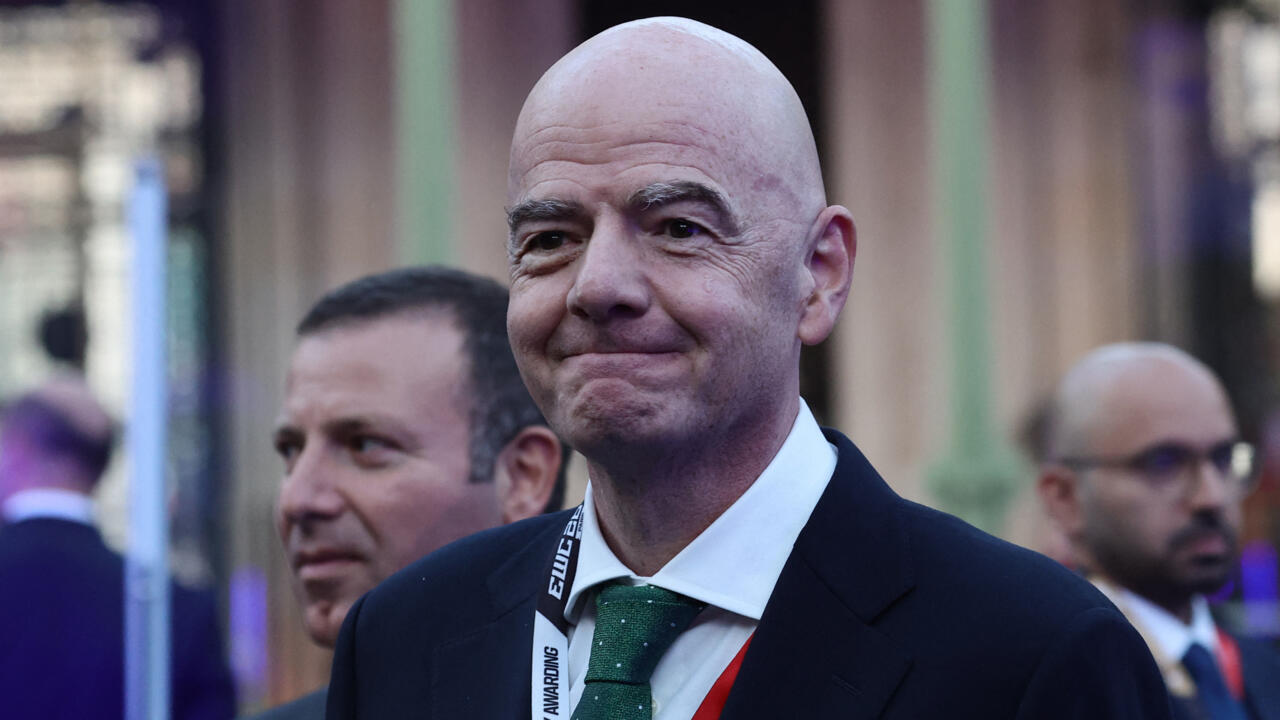
UEFA and CONCACAF leaders have urged FIFA President Gianni Infantino to distribute approximately $2.1 billion from the organization's reserves to its 211 member associations during the 2027-30 cycle.
Leaders from two of world football's most influential continental governing bodies have formally called upon FIFA President Gianni Infantino to release approximately $2.1 billion from the organization's financial reserves. The joint demand, issued by European football chief Aleksander Ceferin and CONCACAF head Victor Montagliani, requests that each of FIFA's 211 member associations receive $10 million during the upcoming four-year cycle spanning from 2027 to 2030.
According to a letter obtained by AFP and sent to the FIFA president, the proposed funds would be specifically designated for investments in local football development and infrastructure. This financial push represents the latest development in an ongoing governance dispute within international football, which intensified following debates over how the global governing body secures its capital.
The push for a multibillion-dollar payout from reserves directly follows sharp industry tensions regarding a controversial proposal from Infantino to sell a stake in the World Cup to private investors. That investment plan ultimately faced a severe backlash from across the sport, with European officials notably threatening to boycott all FIFA competitions until the initiative was abandoned.
While Infantino previously defended the private equity venture as a necessary measure to raise capital for global football expansion, the leaders of UEFA and CONCACAF argued that external financing is entirely unnecessary. In their joint correspondence, the continental chiefs pointed to FIFA's substantial cash reserves, which are currently estimated at around $6 billion, as a readily available resource.
The letter explicitly stated that FIFA possesses the internal financial capacity to provide significantly more support to its member associations directly from its own balance sheet. The authors emphasized that this support could be achieved without selling any interests in premier competitions and without placing financial demands on the member associations themselves.
The requested $2.1 billion aggregate distribution is intended to function as a one-off release of funds. Furthermore, the letter clarifies that this proposed allocation would be provided in addition to the standard development funding already distributed to members annually. Under Infantino's current administration, standard development funding has risen to $8 million per country across a four-year cycle.
Ceferin and Montagliani announced in their communication that they intend to officially issue formal recommendations regarding these financial disbursements at the upcoming meeting of the FIFA Council. The timing of the letter adds additional pressure to FIFA leadership, arriving just a day after another high-profile governance intervention from within the sport.
England's Football Association chair, Debbie Hewitt, recently wrote to Infantino to demand full disclosure of information regarding the shelved private equity plan. Hewitt's letter also requested transparency and documentation surrounding a separate controversial decision involving the suspension of a ban issued to United States striker Folarin Balogun during the World Cup, a reversal that followed a phone call between US President Donald Trump and Infantino.
The unfolding situation highlights deep divisions among major football stakeholders regarding transparency, financial reserves, and the future management of international competitions. As the next FIFA Council meeting approaches, pressure continues to mount on the governing body's leadership to address demands for greater financial accountability and direct investment into member federations.
Topic coverage
Follow recurring subjects across the WORLD PULSE newsroom.
Topics
Reader interest
Most read
 UKKelsey Parker Welcomes New Baby Named River Following Heartbreaking Stillbirth
 AIOpenAI Discloses New Safety Issues and Outlines Plan for Tracking Incidents
 SportsAsian Games Facing Accommodation Crisis and Weather Disruptions in Nagoya, Japan
More from the newsroom
Latest stories
 UKUK Defence Secretary Wes Streeting Urges Public Preparation for Cyber, Climate and Supply Chain Emergencies
 USAFederal Charges Filed Against Virginia State Senator L. Louise Lucas in Alleged Racketeering Scheme
 WorldRising Islamophobia and the Democratic Response to Attacks on Muslim Candidates
 ScienceGlobal Biodiversity Fund Faces Criticism as Pharmaceutical Contributions Stagnate at $7,000
 TechnologyMemphis City Council Rejects One-Year Data Center Moratorium in Favor of 135-Day Halt
 WorldDiplomatic and Military Developments in the Middle East: Iran, Russia, and Regional Security Updates
 WorldRubio Denounces Ukraine’s Claims of Withdrawn U.S. Support as ‘Scandalous’ Amid Oslo Diplomacy
 USATrump Administration Proposes Tying Federal Transit Funding to Local Birth and Marriage Rates
Research & context
Explore WORLD PULSE reference pages
Use these newsroom indexes to follow related coverage, review publication timelines and explore how WORLD PULSE reporting is organized.
Sources & attribution
The external reports, announcements or publications used to inform this article are listed here for attribution and reader context. A source link does not mean WORLD PULSE independently endorses every claim in that source.
Questions about sourcing, attribution or corrections: contact the newsroom.
