US Military Escorts One Billion Barrels of Oil Through Strait of Hormuz Amid Expanding Middle East Conflict
World Pulse Editorial — The WORLD PULSE editorial team covers international news, business, technology, AI, science, sport, culture and other subjects of public interest. The desk applies source attribution, editorial checks, context and corrections standards across the publication.
The byline identifies the newsroom author or editorial team responsible for this publication. Where the story is based on external reporting, those sources are identified below.
AI-assisted production may have been used in the drafting workflow. Source verification, attribution and editorial review remain the responsibility of WORLD PULSE.
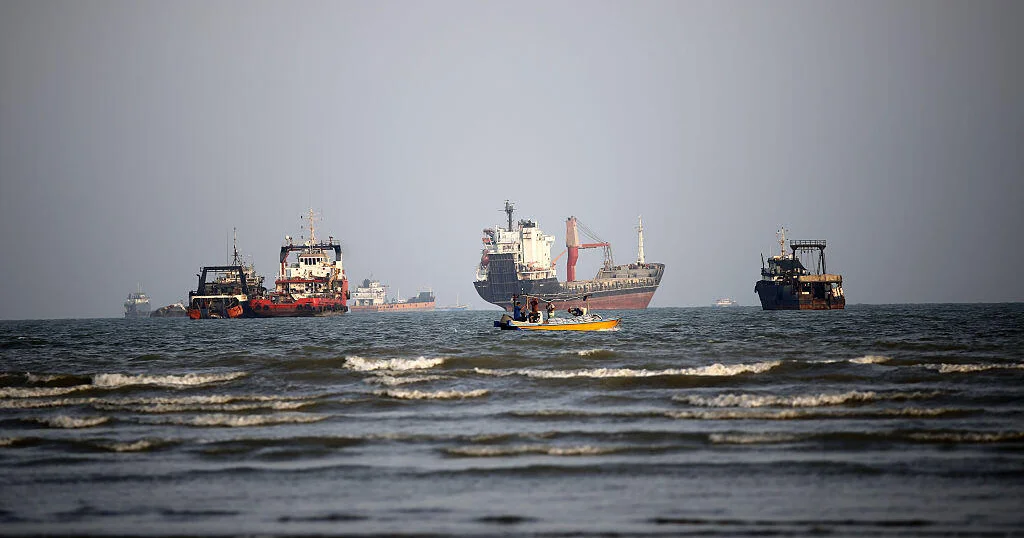
The U.S. military has escorted one billion barrels of oil and over 2,000 commercial vessels out of the Persian Gulf over the past two months, according to U.S. Central Command, as regional tensions escalate following a ballistic missile attack on Riyadh by Yemen's Houthi militia.
The U.S. military has successfully escorted one billion barrels of oil and more than 2,000 commercial vessels out of the Persian Gulf over the last couple of months, U.S. Central Command leader Adm. Brad Cooper announced in a video released on Saturday. The ongoing effort comes as energy markets grapple with severe disruptions caused by the broader conflict involving the United States, Iran, and allied regional groups.
Simultaneously, the security situation across the Middle East has grown increasingly volatile. On Saturday, Yemen's Iran-backed Houthi militia expanded its attacks deep into Saudi territory, targeting oil storage facilities near the Riyadh international airport and Aramco installations in Yanbu. Saudi coalition spokesman Turki al-Malki stated that the kingdom's air defense forces successfully intercepted and destroyed a ballistic missile fired at Riyadh at dawn, alongside other attempted strikes in Bisha, Taif, Farasan, and Yanbu. Residents in the Saudi capital reported hearing explosions and seeing black smoke near airport buildings, though authorities reported no immediate casualties.
The strike marked the first time the Saudi capital has been directly threatened since a recent escalation in fighting opened a new front in the regional war. In response to the attack, Egypt, Jordan, Kuwait, and the Muslim World League issued separate statements condemning the action as a violation of international law and a threat to regional stability.
Amid the mounting hostilities, U.S. embassies across the Middle East issued security alerts for American citizens over the weekend, warning of the potential for unforeseen escalation. The U.S. State Department cautioned travelers to exercise heightened vigilance regarding potential flight cancellations, airspace closures, and travel disruptions as hostilities between Saudi Arabia and the Houthis intensify.
Political and diplomatic maneuvering has unfolded in parallel with the military developments. CIA Director John Ratcliffe traveled to Cairo on Sunday for meetings with Egyptian President Abdel Fattah al-sisi and Egypt's spy chief Hassan Rashad. According to the Egyptian presidency, the discussions focused on the wars in Iran, Gaza, and Sudan, as well as maritime security threats. Sisi emphasized the critical importance of pursuing political and diplomatic solutions to settle regional crises.
Meanwhile, diplomatic channels regarding key maritime choke points remain deadlocked. Iran's top negotiator and parliament speaker, Mohammad Bagher Ghalibaf, stated Sunday that Tehran has conveyed its conditions to Washington through mediators for reopening the strategic Strait of Hormuz, which has remained blockaded during the conflict. Mohsen Rezaei, head of Iran's supreme national security council, noted via Qatari mediators that Tehran's terms include an end to the war on all fronts, the release of frozen funds, and the cessation of the naval blockade.
President Trump told Fox News on Sunday that he remains in a "deciding mode" regarding the conflict with Iran, weighing several options that include pursuing a diplomatic deal, applying economic pressure, or launching a major military assault to dismantle the Iranian regime. Trump is also anticipated to meet with Persian Gulf leaders later in the week, alongside expectations surrounding Iranian President Masoud Pezeshkian's scheduled appearance at the United Nations General Assembly in New York.
Topic coverage
Follow recurring subjects across the WORLD PULSE newsroom.
Topics
Developing story
Follow the latest developments
Recent WORLD PULSE coverage with overlapping event terms is grouped here so readers can follow how the story is developing.
Reader interest
Most read
 UKKelsey Parker Welcomes New Baby Named River Following Heartbreaking Stillbirth
 AIOpenAI Discloses New Safety Issues and Outlines Plan for Tracking Incidents
 SportsAsian Games Facing Accommodation Crisis and Weather Disruptions in Nagoya, Japan
More from the newsroom
Latest stories
 UKUK Defence Secretary Wes Streeting Urges Public Preparation for Cyber, Climate and Supply Chain Emergencies
 USAFederal Charges Filed Against Virginia State Senator L. Louise Lucas in Alleged Racketeering Scheme
 WorldRising Islamophobia and the Democratic Response to Attacks on Muslim Candidates
 ScienceGlobal Biodiversity Fund Faces Criticism as Pharmaceutical Contributions Stagnate at $7,000
 TechnologyMemphis City Council Rejects One-Year Data Center Moratorium in Favor of 135-Day Halt
 WorldDiplomatic and Military Developments in the Middle East: Iran, Russia, and Regional Security Updates
 WorldRubio Denounces Ukraine’s Claims of Withdrawn U.S. Support as ‘Scandalous’ Amid Oslo Diplomacy
 USATrump Administration Proposes Tying Federal Transit Funding to Local Birth and Marriage Rates
Research & context
Explore WORLD PULSE reference pages
Use these newsroom indexes to follow related coverage, review publication timelines and explore how WORLD PULSE reporting is organized.
Sources & attribution
The external reports, announcements or publications used to inform this article are listed here for attribution and reader context. A source link does not mean WORLD PULSE independently endorses every claim in that source.
Questions about sourcing, attribution or corrections: contact the newsroom.
