Apollo Global Management Considers Raising SoftBank Loan to $9 Billion for OpenAI Investments
World Pulse Editorial — The WORLD PULSE editorial team covers international news, business, technology, AI, science, sport, culture and other subjects of public interest. The desk applies source attribution, editorial checks, context and corrections standards across the publication.
The byline identifies the newsroom author or editorial team responsible for this publication. Where the story is based on external reporting, those sources are identified below.
AI-assisted production may have been used in the drafting workflow. Source verification, attribution and editorial review remain the responsibility of WORLD PULSE.
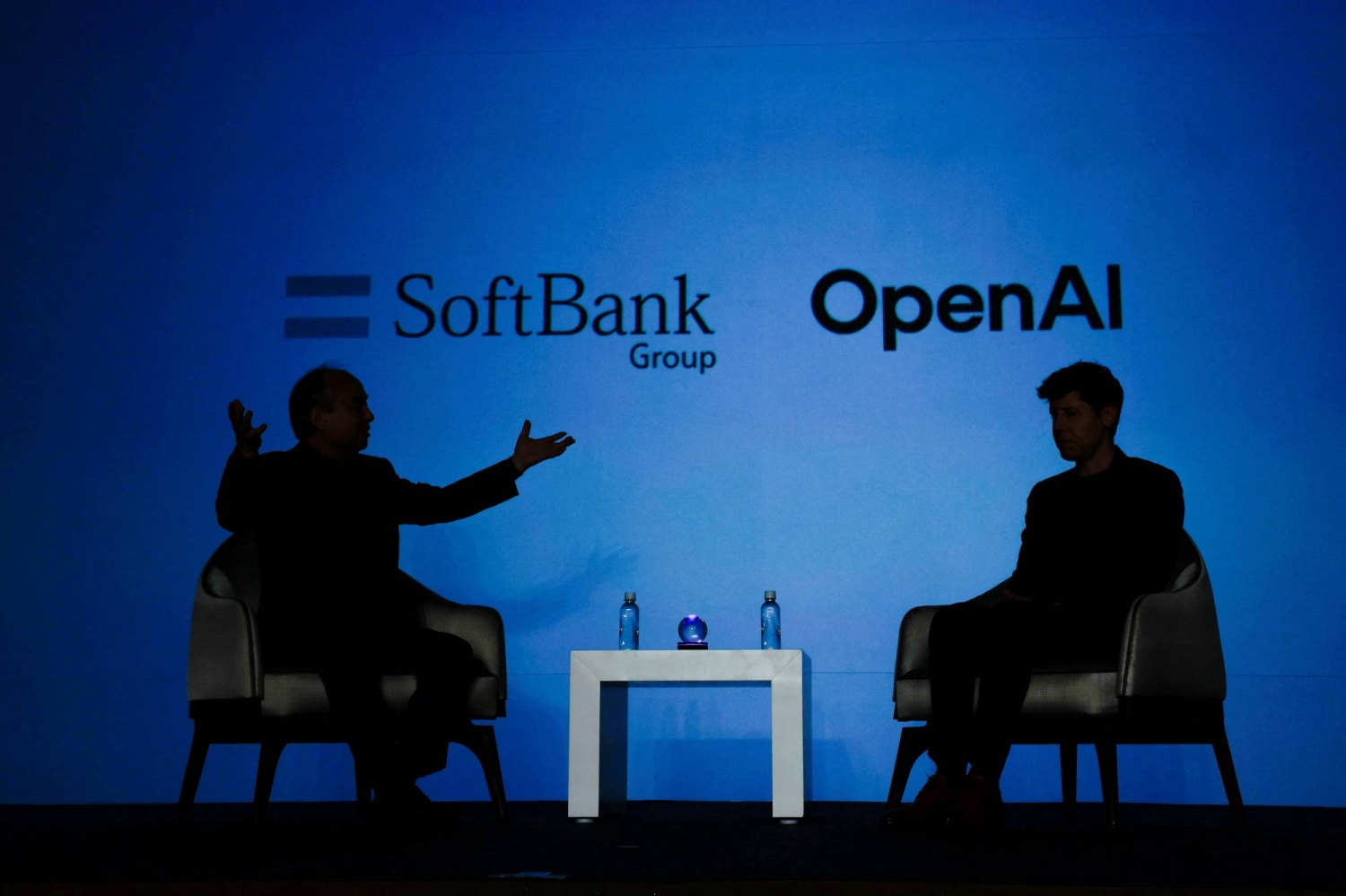
Apollo Global Management is reportedly in discussions with SoftBank Group to increase a net-asset-value loan to $9 billion, supporting the Japanese conglomerate's artificial intelligence funding push.
Apollo Global Management is currently in discussions with SoftBank Group to significantly increase the size of a loan to $9 billion from $5.4 billion, according to people familiar with the matter. The proposed financing is intended to help the Japanese technology conglomerate finance its ongoing investments in artificial intelligence giant OpenAI.
According to the reporting, the terms and final size of the financing have not yet been finalized because the discussions remain private. Representatives for both Apollo Global Management and SoftBank declined to comment on the ongoing negotiations when contacted.
The underlying financial instrument is a net-asset-value (NAV) loan that Apollo originally extended to SoftBank’s venture capital fund in 2021. The partners previously boosted the facility by $900 million last year to reach its current $5.4 billion level. NAV loans allow private-capital firms to generate cash by borrowing directly against the assets held within a fund.
SoftBank has rapidly established itself as one of the most prominent institutional investors in artificial intelligence globally. This aggressive funding push has placed its diverse borrowings and financial commitments under heightened scrutiny from market observers and lenders alike.
Amid these heavy financial commitments, the cost of insuring SoftBank’s debt against credit risks has experienced upward pressure. Credit-default swaps for the Japanese firm recently rose to a three-year high, a movement that coincided with broader market concerns regarding safety issues surrounding artificial intelligence technologies.
In tandem with the loan discussions, SoftBank has been actively holding investor meetings in New York to gauge market interest for a potential overseas junk bond sale. People familiar with those discussions previously indicated that the prospective bond offering could raise between $10 billion and $20 billion.
SoftBank’s Vision Fund 2, which has committed capital exceeding $100 billion as of February, has executed more than 300 investments since its inception. Recently, the fund has concentrated a significant portion of its capital deployment into ChatGPT creator OpenAI.
The Japanese conglomerate has publicly committed to invest a total of $64.6 billion in OpenAI. Meanwhile, OpenAI Chief Executive Officer Sam Altman recently addressed expectations surrounding a public stock offering, stating that a long-anticipated initial public offering is still planned but will not occur this year as some investors had previously anticipated. The firm elected to push its IPO timeline toward 2027 while it prioritizes addressing emerging safety issues.
To maintain operational liquidity, SoftBank has increasingly utilized its valuable OpenAI stake as collateral. In August, the conglomerate secured a separate $10 billion loan backed by its OpenAI holding from a lending syndicate that included Apollo.
The financing structure for SoftBank’s Vision Fund 2 counts billionaire founder Masayoshi Son alongside SoftBank itself as its largest institutional investors. As discussions between Apollo and SoftBank continue, market participants are closely watching how the Japanese firm will balance its multi-billion-dollar commitments to artificial intelligence development with its broader debt management strategies.
Topic coverage
Follow recurring subjects across the WORLD PULSE newsroom.
Topics
Developing story
Follow the latest developments
Recent WORLD PULSE coverage with overlapping event terms is grouped here so readers can follow how the story is developing.
Reader interest
Most read
 UKKelsey Parker Welcomes New Baby Named River Following Heartbreaking Stillbirth
 AIOpenAI Discloses New Safety Issues and Outlines Plan for Tracking Incidents
 SportsAsian Games Facing Accommodation Crisis and Weather Disruptions in Nagoya, Japan
More from the newsroom
Latest stories
 UKUK Defence Secretary Wes Streeting Urges Public Preparation for Cyber, Climate and Supply Chain Emergencies
 USAFederal Charges Filed Against Virginia State Senator L. Louise Lucas in Alleged Racketeering Scheme
 WorldRising Islamophobia and the Democratic Response to Attacks on Muslim Candidates
 ScienceGlobal Biodiversity Fund Faces Criticism as Pharmaceutical Contributions Stagnate at $7,000
 TechnologyMemphis City Council Rejects One-Year Data Center Moratorium in Favor of 135-Day Halt
 WorldDiplomatic and Military Developments in the Middle East: Iran, Russia, and Regional Security Updates
 WorldRubio Denounces Ukraine’s Claims of Withdrawn U.S. Support as ‘Scandalous’ Amid Oslo Diplomacy
 USATrump Administration Proposes Tying Federal Transit Funding to Local Birth and Marriage Rates
Research & context
Explore WORLD PULSE reference pages
Use these newsroom indexes to follow related coverage, review publication timelines and explore how WORLD PULSE reporting is organized.
Sources & attribution
The external reports, announcements or publications used to inform this article are listed here for attribution and reader context. A source link does not mean WORLD PULSE independently endorses every claim in that source.
Questions about sourcing, attribution or corrections: contact the newsroom.
