North Korea Launches Two Ballistic Missiles Toward Sea in Fresh Pressure on U.S.
World Pulse Editorial — The WORLD PULSE editorial team covers international news, business, technology, AI, science, sport, culture and other subjects of public interest. The desk applies source attribution, editorial checks, context and corrections standards across the publication.
The byline identifies the newsroom author or editorial team responsible for this publication. Where the story is based on external reporting, those sources are identified below.
AI-assisted production may have been used in the drafting workflow. Source verification, attribution and editorial review remain the responsibility of WORLD PULSE.
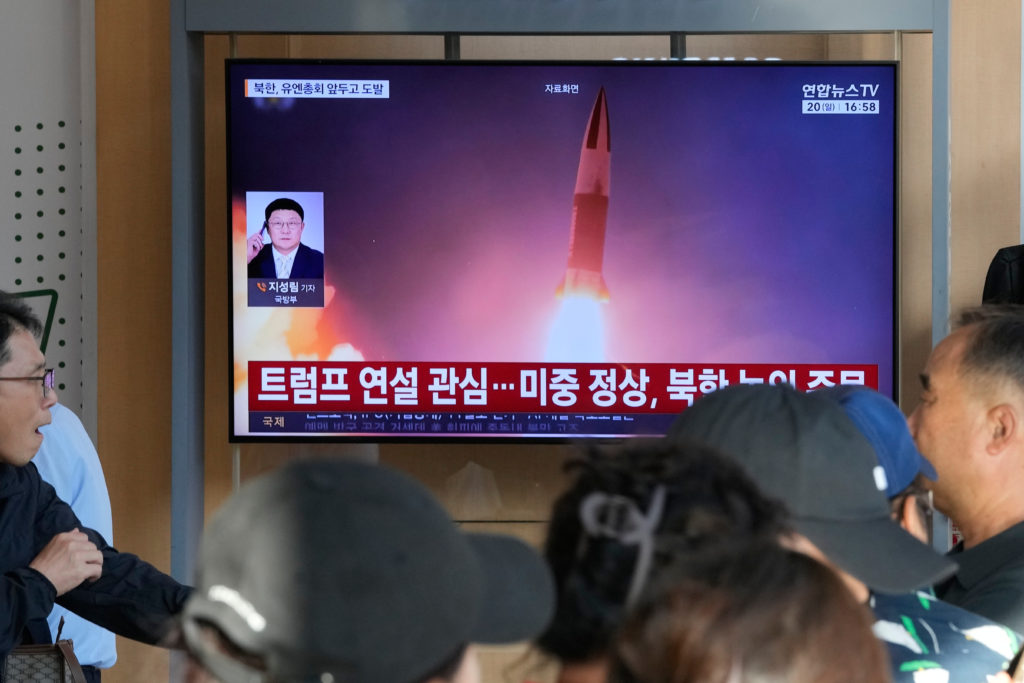
North Korea launched two short-range ballistic missiles into eastern waters on Sunday, according to South Korea's military, continuing a series of weapons tests amid stalled diplomacy and regional tensions.
North Korea launched two short-range ballistic missiles toward the sea on Sunday, South Korea's military reported, marking the latest escalation in a series of weapons demonstrations by Pyongyang. The launches come just days after North Korea threatened to bolster its nuclear deterrent capabilities and respond to what it termed ongoing hostilities by the United States and its regional allies.
According to South Korea's military, the two missile launches occurred approximately three hours apart and were conducted from the eastern coastal area of Wonsan. The first projectile traveled roughly 450 kilometers, or about 280 miles, while the second missile flew more than 600 kilometers, or approximately 370 miles. Both weapons ultimately landed in the sea off North Korea's eastern coast.
Japan's Defense Ministry also confirmed detecting a suspected North Korean missile earlier Sunday, noting that the weapon did not land within Japanese territorial waters. In response to the launches, South Korea's presidential office urged Pyongyang to immediately halt ballistic missile tests, which violate United Nations Security Council resolutions. South Korea's military emphasized that it maintains a strong defense readiness alongside its alliance with the United States to repel any potential provocations.
The weekend launches follow a broader pattern of rising regional friction. Earlier in the week, Kim Yo Jong, a senior North Korean official and the sister of leader Kim Jong Un, dismissed recent overtures by U.S. President Donald Trump. President Trump had previously scaled back a joint military exercise with South Korea in an apparent effort to revive diplomacy with Pyongyang, but Kim Yo Jong asserted that shortening the drills did not alter their provocative and aggressive nature.
North Korea's military previously launched about 10 short-range ballistic missiles into the sea, following through on threats to counter combined U.S. and South Korean military exercises. Kim Yo Jong also strongly criticized a recent U.S.-led multilateral maritime exercise in the region known as 'Pacific Vanguard,' which involved forces from the United States, South Korea, Japan, Australia, New Zealand, and Canada. She characterized regular U.S.-led war rehearsals as frantic military moves meant to prolong American hegemony in the Asia-Pacific and named them as the primary source of worsening security tensions on the Korean Peninsula.
North Korea has continued to focus on expanding its nuclear arsenal and developing advanced military capabilities since high-stakes diplomacy between Kim Jong Un and President Trump collapsed in 2019. Earlier this month, Pyongyang conducted a joint live-fire drill involving missiles, artillery, and drones just a day after the United States, South Korea, and Japan concluded a trilateral military drill. Analysts note that North Korea's simultaneous testing of diverse weapon systems aims to improve its ability to overwhelm allied air defense systems.
Despite President Trump ordering the Pentagon to substantially reduce the annual Ulchi Freedom Shield exercise with South Korea—citing his relationship with Kim Jong Un, who frequently labels such drills invasion rehearsals—the prospects for a swift resumption of dialogue remain uncertain. Experts suggest that North Korea feels emboldened by its advancing nuclear capabilities and deepening strategic ties with Russia and China, believing it holds stronger leverage for any future negotiations. Kim Jong Un has previously stated he could return to talks if the United States drops its hostile policy and recognizes the North's status as a nuclear-armed state.
Meanwhile, South Korean President Lee Jae Myung expressed support for renewed engagement, telling reporters that restarting talks between Washington and Pyongyang would serve as an important starting point for peace on the peninsula. President Lee noted that President Trump has indicated a desire for dialogue, an approach that South Korean officials continue to encourage as regional military exercises and weapons tests persist.
Topic coverage
Follow recurring subjects across the WORLD PULSE newsroom.
Topics
Reader interest
Most read
 UKKelsey Parker Welcomes New Baby Named River Following Heartbreaking Stillbirth
 AIOpenAI Discloses New Safety Issues and Outlines Plan for Tracking Incidents
 SportsAsian Games Facing Accommodation Crisis and Weather Disruptions in Nagoya, Japan
More from the newsroom
Latest stories
 UKUK Defence Secretary Wes Streeting Urges Public Preparation for Cyber, Climate and Supply Chain Emergencies
 USAFederal Charges Filed Against Virginia State Senator L. Louise Lucas in Alleged Racketeering Scheme
 WorldRising Islamophobia and the Democratic Response to Attacks on Muslim Candidates
 ScienceGlobal Biodiversity Fund Faces Criticism as Pharmaceutical Contributions Stagnate at $7,000
 TechnologyMemphis City Council Rejects One-Year Data Center Moratorium in Favor of 135-Day Halt
 WorldDiplomatic and Military Developments in the Middle East: Iran, Russia, and Regional Security Updates
 WorldRubio Denounces Ukraine’s Claims of Withdrawn U.S. Support as ‘Scandalous’ Amid Oslo Diplomacy
 USATrump Administration Proposes Tying Federal Transit Funding to Local Birth and Marriage Rates
Research & context
Explore WORLD PULSE reference pages
Use these newsroom indexes to follow related coverage, review publication timelines and explore how WORLD PULSE reporting is organized.
Sources & attribution
The external reports, announcements or publications used to inform this article are listed here for attribution and reader context. A source link does not mean WORLD PULSE independently endorses every claim in that source.
Questions about sourcing, attribution or corrections: contact the newsroom.
