Scientists Fly Into Wildfire Firestorm Clouds in Breakthrough Research Mission
World Pulse Editorial — The WORLD PULSE editorial team covers international news, business, technology, AI, science, sport, culture and other subjects of public interest. The desk applies source attribution, editorial checks, context and corrections standards across the publication.
The byline identifies the newsroom author or editorial team responsible for this publication. Where the story is based on external reporting, those sources are identified below.
AI-assisted production may have been used in the drafting workflow. Source verification, attribution and editorial review remain the responsibility of WORLD PULSE.
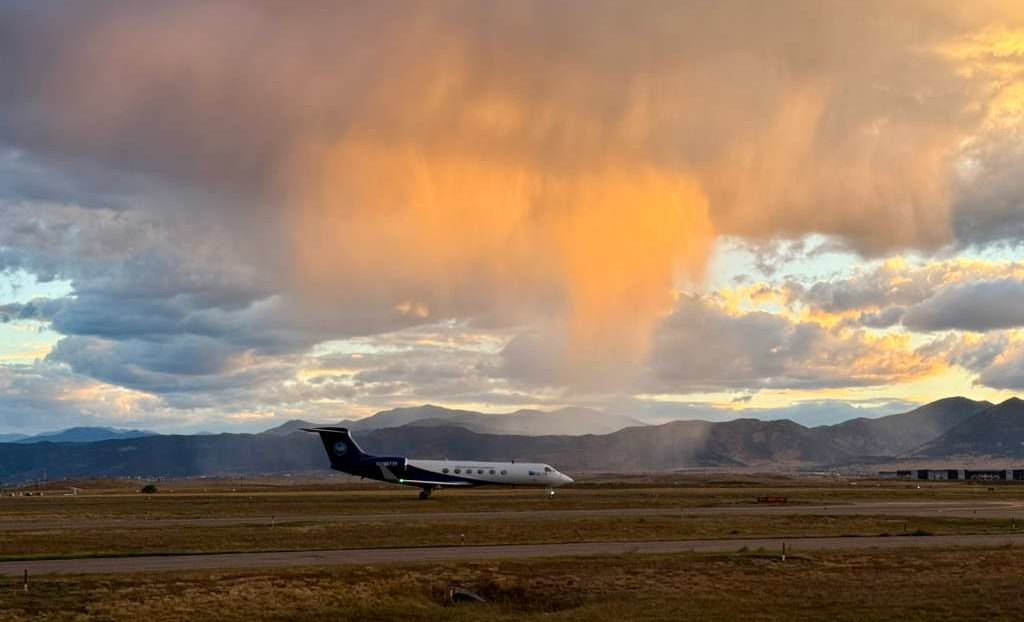
Researchers have completed a major airborne mission flying directly into severe pyrocumulonimbus storm clouds generated by intense wildfires to gather unprecedented real-time data.
As wildfires grow larger and hotter around the world, a team of researchers has embarked on an unprecedented airborne mission to study the severe storm clouds that form over intense blazes. Known as pyrocumulonimbus, or pyroCb, these firestorm clouds can pump as much smoke into the stratosphere as a volcanic eruption while generating extreme weather phenomena including dry lightning and firenadoes. Because much about their inner workings remains unknown, predicting their behavior poses a significant danger to residents and emergency crews.
This summer, a multi-year collaborative project called the Injected Smoke and Pyrocumulonimbus Experiment, or INSPYRE, deployed a pair of research aircraft to fly over, around, and directly into active wildfire smoke plumes. The mission is led by scientists from NASA, the U.S. Naval Research Laboratory, and the National Center for Atmospheric Research. According to NASA Goddard Space Flight Center research physical scientist John Yorks, being able to sample inside the plumes, inside the clouds, and above them simultaneously is something researchers have never achieved before.
Describing the operational scope, NRL meteorologist and principal investigator David Peterson compared the project to a well-organized storm chase targeting storms triggered by wildfires. Peterson noted that the team's initial deployment successfully wrapped up after navigating what he called an unworldly experience of flying through dark, orange-hued smoke and sampling the tops of the clouds. The project involves a coordinated effort of at least 150 personnel on the ground and in the air, utilizing truck-mounted radar and lidar alongside specialized aircraft.
NASA's Earth Resources-2 plane operated as a steerable satellite high above the weather, while the National Center for Atmospheric Research Gulfstream V aircraft flew through the smoke below. Inlets on the Gulfstream V pulled outside air into onboard instruments to measure chemicals, aerosols, and water vapor. During the final week of this year's deployment, crews tracked a smoke plume originating from a massive firestorm cloud in Siberia that crossed the Pacific Ocean and reached as far as Idaho, representing what Peterson described as the most comprehensive sampling of such an event to date.
Firestorm clouds form when hot, dry, windy conditions with abundant fuel create dense smoke plumes that rapidly carry water vapor and smoke particles high into the atmosphere. As the water vapor cools and condenses, a pyroCb cloud forms. Researchers explain that these formations act like giant chimneys, amplifying weather events by orders of magnitude and creating hazardous conditions on the ground. Dry lightning can ignite new fires miles away, while strong downdrafts produce storm-force winds that endanger firefighters. Furthermore, the thick smoke and cloud cover obscure the flames, complicating evacuation efforts.
While more commonly observed in North America and Australia, pyrocumulonimbus clouds are increasingly appearing in other regions, including Europe. France documented its first recorded pyroCb cloud in July amid record continental heat. Over the past decade, major events have pushed massive quantities of smoke to high altitudes, rivaling or exceeding volcanic eruptions. This includes Australia's devastating 2019-2020 Black Summer bushfire season, which produced a super outbreak of pyroCb clouds, including one plume that persisted in the Southern Hemisphere for over a year.
Despite their impacts, firestorm clouds have only been studied intensively for about 15 to 20 years, leaving significant gaps in understanding how they form and interact with regional meteorology. While satellites have long provided top-down observations, scientists previously lacked direct in-situ data from within the clouds. Ziming Ke, an assistant research scientist at the Desert Research Institute who led a 2025 study simulating firestorm clouds using an Earth system model, compared the previous lack of visibility to looking inside a smoky house.
Researchers are particularly focused on analyzing aerosols such as black carbon, or soot, which absorbs solar radiation and generates heat. Chemistry professor Anne Perring of Colgate University noted that a primary objective is understanding how efficiently black carbon moves through the system and whether it survives into the upper atmosphere to alter atmospheric chemistry. Better data on particle sizes and ice crystal formation will allow forecasters to improve computer models, predict lightning, and better forecast smoke dispersion and temperature effects.
With this year's flights concluded, the INSPYRE team is shifting its focus to detailed data analysis. Researchers plan to evaluate what was captured successfully, identify remaining gaps, and prepare for subsequent deployments next year to continue refining their predictive models.
Topic coverage
Follow recurring subjects across the WORLD PULSE newsroom.
Topics
Reader interest
Most read
 UKKelsey Parker Welcomes New Baby Named River Following Heartbreaking Stillbirth
 AIOpenAI Discloses New Safety Issues and Outlines Plan for Tracking Incidents
 SportsAsian Games Facing Accommodation Crisis and Weather Disruptions in Nagoya, Japan
More from the newsroom
Latest stories
 UKUK Defence Secretary Wes Streeting Urges Public Preparation for Cyber, Climate and Supply Chain Emergencies
 USAFederal Charges Filed Against Virginia State Senator L. Louise Lucas in Alleged Racketeering Scheme
 WorldRising Islamophobia and the Democratic Response to Attacks on Muslim Candidates
 ScienceGlobal Biodiversity Fund Faces Criticism as Pharmaceutical Contributions Stagnate at $7,000
 TechnologyMemphis City Council Rejects One-Year Data Center Moratorium in Favor of 135-Day Halt
 WorldDiplomatic and Military Developments in the Middle East: Iran, Russia, and Regional Security Updates
 WorldRubio Denounces Ukraine’s Claims of Withdrawn U.S. Support as ‘Scandalous’ Amid Oslo Diplomacy
 USATrump Administration Proposes Tying Federal Transit Funding to Local Birth and Marriage Rates
Research & context
Explore WORLD PULSE reference pages
Use these newsroom indexes to follow related coverage, review publication timelines and explore how WORLD PULSE reporting is organized.
Sources & attribution
The external reports, announcements or publications used to inform this article are listed here for attribution and reader context. A source link does not mean WORLD PULSE independently endorses every claim in that source.
Questions about sourcing, attribution or corrections: contact the newsroom.
