T. rex Had a Body Temperature Similar to Humans, Study of Fossilized Teeth Reveals
World Pulse Editorial — The WORLD PULSE editorial team covers international news, business, technology, AI, science, sport, culture and other subjects of public interest. The desk applies source attribution, editorial checks, context and corrections standards across the publication.
The byline identifies the newsroom author or editorial team responsible for this publication. Where the story is based on external reporting, those sources are identified below.
AI-assisted production may have been used in the drafting workflow. Source verification, attribution and editorial review remain the responsibility of WORLD PULSE.
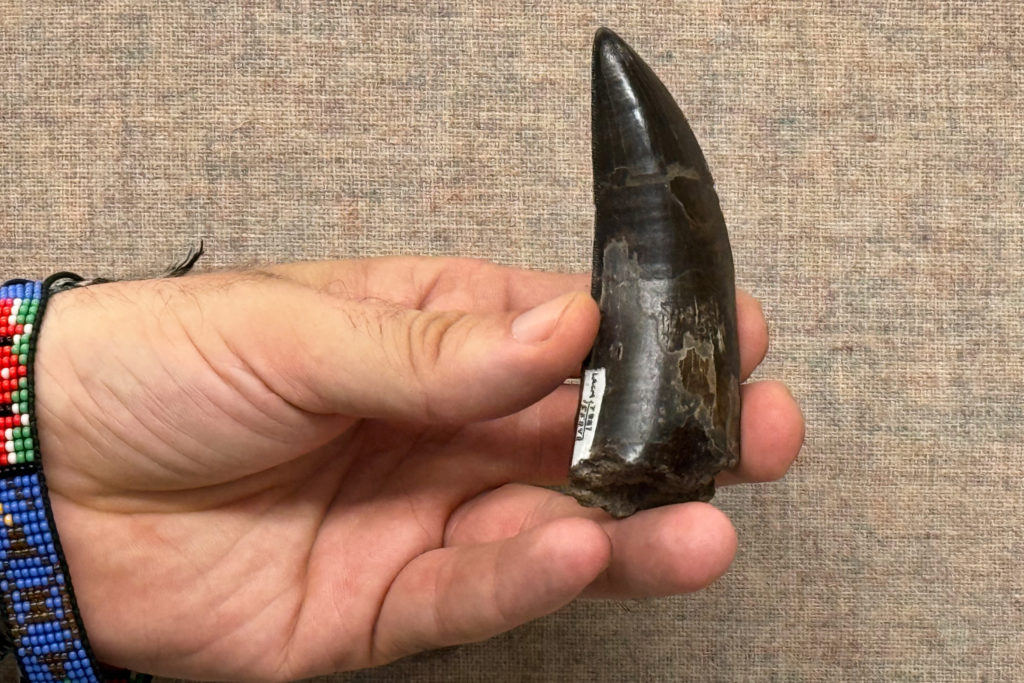
Researchers analyzing fossilized teeth have determined that the Tyrannosaurus rex had an average body temperature of about 97 degrees Fahrenheit, comparable to humans and modern elephants.
Scientists have successfully measured the body temperature of a Tyrannosaurus rex for the first time, discovering that the iconic apex predator maintained an internal temperature remarkably similar to that of modern humans and elephants. The findings, published Wednesday in the journal Science Advances, offer new insight into the biology and ecology of one of history's most famous dinosaurs.
For generations, early paleontologists viewed dinosaurs as sluggish, cold-blooded reptiles dependent on their external environment for warmth. Decades of subsequent research challenged that assumption, leading many scientists to conclude that large dinosaurs were warm-blooded and capable of regulating their internal temperatures. However, determining an exact core temperature for an extinct creature that vanished millions of years ago remained a significant challenge.
"We can't just use a thermometer to do that," noted Jasmina Wiemann, a paleobiologist at Johns Hopkins University who was not involved in the new research. Previous attempts to calculate dinosaur body temperatures relied on indirect clues, such as analyzing growth rates or examining bone structure, but a definitive numerical reading had previously eluded researchers.
To overcome this obstacle, the study's authors turned to chemical analysis of the predator's fossilized teeth. The research team discovered that atoms within tooth enamel clump together in distinct patterns that directly reflect an animal's body temperature while the enamel was forming.
"We figured out how warm the most famous animal of all, a T. rex, was," said co-author Aradhna Tripati, a geochemist at the University of California, Los Angeles.
By taking readings from three preserved T. rex teeth, the researchers calculated an average body temperature of approximately 97 degrees Fahrenheit, or 36 degrees Celsius. This measurement aligns closely with the body temperatures of modern elephants and falls just under the typical human range of 97 to 99 degrees Fahrenheit (36 to 37 degrees Celsius).
The measurement surprised some experts in the field. Wiemann stated that she initially anticipated a higher internal temperature, closer to 100 degrees Fahrenheit or more, which would have mirrored modern birds—the direct living descendants of dinosaurs.
Understanding the precise thermal biology of the Tyrannosaurus rex helps researchers reconstruct how the animal lived, hunted, and interacted with its environment. According to Tripati, maintaining a stable internal temperature of 97 degrees Fahrenheit would have allowed the T. rex to thrive across diverse regions of prehistoric North America, giving it a reliable internal thermostat whether it roamed cooler northern latitudes or hotter southern habitats. Furthermore, understanding the metabolic rate of the predator helps scientists model the caloric intake and prey requirements necessary to sustain such a massive creature.
Following this breakthrough, the research team emphasizes the need to apply the tooth-enamel analysis method to a broader array of dinosaur species. Investigating other prehistoric animals could reveal whether a body temperature around 97 degrees Fahrenheit was common among giant theropods or if it played a unique role in establishing the T. rex's ecological dominance during the age of dinosaurs.
"There's lots of interesting, charismatic species that could be explored using this," said study co-author Robert Eagle, a geobiologist at UCLA.
Topic coverage
Follow recurring subjects across the WORLD PULSE newsroom.
Topics
Reader interest
Most read
 UKKelsey Parker Welcomes New Baby Named River Following Heartbreaking Stillbirth
 AIOpenAI Discloses New Safety Issues and Outlines Plan for Tracking Incidents
 SportsAsian Games Facing Accommodation Crisis and Weather Disruptions in Nagoya, Japan
More from the newsroom
Latest stories
 UKUK Defence Secretary Wes Streeting Urges Public Preparation for Cyber, Climate and Supply Chain Emergencies
 USAFederal Charges Filed Against Virginia State Senator L. Louise Lucas in Alleged Racketeering Scheme
 WorldRising Islamophobia and the Democratic Response to Attacks on Muslim Candidates
 ScienceGlobal Biodiversity Fund Faces Criticism as Pharmaceutical Contributions Stagnate at $7,000
 TechnologyMemphis City Council Rejects One-Year Data Center Moratorium in Favor of 135-Day Halt
 WorldDiplomatic and Military Developments in the Middle East: Iran, Russia, and Regional Security Updates
 WorldRubio Denounces Ukraine’s Claims of Withdrawn U.S. Support as ‘Scandalous’ Amid Oslo Diplomacy
 USATrump Administration Proposes Tying Federal Transit Funding to Local Birth and Marriage Rates
Research & context
Explore WORLD PULSE reference pages
Use these newsroom indexes to follow related coverage, review publication timelines and explore how WORLD PULSE reporting is organized.
Sources & attribution
The external reports, announcements or publications used to inform this article are listed here for attribution and reader context. A source link does not mean WORLD PULSE independently endorses every claim in that source.
Questions about sourcing, attribution or corrections: contact the newsroom.
