Taiwan Conducts First Joint Drill Using Multiple Attack Drones in Modernisation Push
World Pulse Editorial — The WORLD PULSE editorial team covers international news, business, technology, AI, science, sport, culture and other subjects of public interest. The desk applies source attribution, editorial checks, context and corrections standards across the publication.
The byline identifies the newsroom author or editorial team responsible for this publication. Where the story is based on external reporting, those sources are identified below.
AI-assisted production may have been used in the drafting workflow. Source verification, attribution and editorial review remain the responsibility of WORLD PULSE.
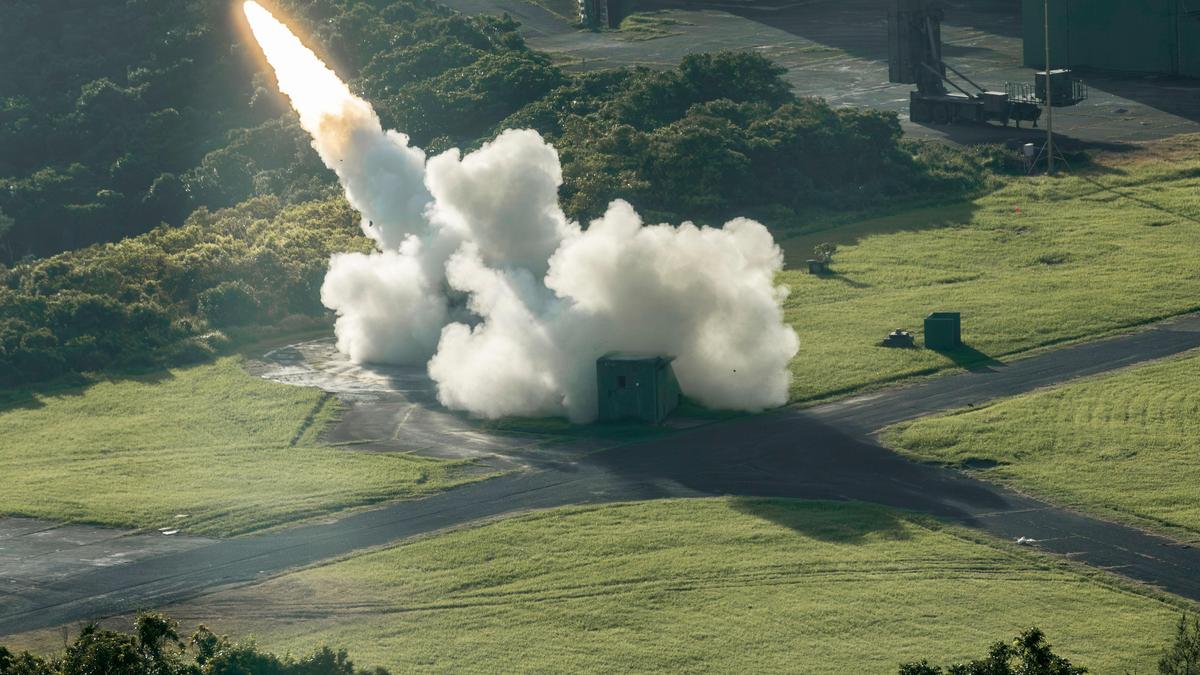
Taiwan's military has carried out its first joint combat exercise utilizing multiple types of attack drones, as part of President Lai Ching-te's defense modernization agenda amid growing security concerns.
Taiwan's armed forces have conducted their first-ever joint combat exercise incorporating multiple types of attack drones, according to statements from President Lai Ching-te. The drills reflect an ongoing effort to adapt the island's military capabilities to the realities of modern warfare.
President Lai inspected the exercises firsthand in the far southern region of Taiwan. The multi-day maneuvers involved more than just unmanned aerial systems, also featuring the deployment of domestically developed Hsiung Feng III anti-ship missiles alongside Lockheed Martin-made HIMARS rocket systems.
Speaking to military officers during the inspection, Mr. Lai emphasized that precision firing exercises remain essential for properly evaluating weapon effectiveness. A transcript of his remarks released by the presidential office highlighted the significance of the recent training operations.
"In particular, this marks the first time the military has incorporated multiple types of attack drones into joint combat exercises," Mr. Lai stated, noting that the coordinated deployment of unmanned vehicles alongside traditional conventional weaponry demonstrates a clear adaptation to modern combat environments.
While official statements and presidential transcripts detailed the incorporation of drones, the presidential office did not publicly specify the exact models or categories of unmanned aerial vehicles utilized during the three-day exercise, limiting published imagery primarily to missile launches.
The strategic integration of drones into military planning draws direct lessons from recent international conflicts. Unmanned aerial systems, valued for their cost-effectiveness and operational utility, have emerged as central components of modern warfare in both the conflict between Russia and Ukraine and ongoing hostilities in West Asia. Taiwan's defense planners have closely monitored these global developments to refine their own contingency strategies.
Defense modernization has emerged as a central pillar of President Lai's political and administrative agenda. This focus is largely driven by escalating military threats from Beijing. In addition to expanding domestic drone development and manufacturing capabilities, the administration has steadily increased defense spending—an area that U.S. President Donald Trump has repeatedly urged international allies to prioritize.
During his inspection tour in southern Taiwan, Mr. Lai was accompanied by key national security figures, including Defense Minister Wellington Koo. Also in attendance was Kuan Bi-ling, who leads Taiwan’s Ocean Affairs Council, reflecting a broader governmental push to better coordinate maritime security.
Authorities have steadily worked to integrate the Taiwan Coast Guard into wider national defense frameworks. Under current contingency planning, the Coast Guard is expected to fulfill an auxiliary support role to the regular navy in the event of an armed conflict. Demonstrating this integrated capability, a Coast Guard vessel was previously equipped with anti-ship missiles during Taiwan's primary annual war games held in August.
President Lai and the broader Taiwanese administration consistently reject Beijing’s territorial and sovereignty claims over the island. Taipei maintains that only the people of Taiwan possess the right to determine their own political future.
Concluding his remarks to military personnel, Mr. Lai asserted that the acceleration of national combat capabilities demonstrates that Taiwan maintains both the confidence and the practical capacity to defend its national sovereignty while actively fulfilling its responsibilities to maintain regional peace and stability.
Topic coverage
Follow recurring subjects across the WORLD PULSE newsroom.
Topics
Reader interest
Most read
 UKKelsey Parker Welcomes New Baby Named River Following Heartbreaking Stillbirth
 AIOpenAI Discloses New Safety Issues and Outlines Plan for Tracking Incidents
 SportsAsian Games Facing Accommodation Crisis and Weather Disruptions in Nagoya, Japan
More from the newsroom
Latest stories
 UKUK Defence Secretary Wes Streeting Urges Public Preparation for Cyber, Climate and Supply Chain Emergencies
 USAFederal Charges Filed Against Virginia State Senator L. Louise Lucas in Alleged Racketeering Scheme
 WorldRising Islamophobia and the Democratic Response to Attacks on Muslim Candidates
 ScienceGlobal Biodiversity Fund Faces Criticism as Pharmaceutical Contributions Stagnate at $7,000
 TechnologyMemphis City Council Rejects One-Year Data Center Moratorium in Favor of 135-Day Halt
 WorldDiplomatic and Military Developments in the Middle East: Iran, Russia, and Regional Security Updates
 WorldRubio Denounces Ukraine’s Claims of Withdrawn U.S. Support as ‘Scandalous’ Amid Oslo Diplomacy
 USATrump Administration Proposes Tying Federal Transit Funding to Local Birth and Marriage Rates
Research & context
Explore WORLD PULSE reference pages
Use these newsroom indexes to follow related coverage, review publication timelines and explore how WORLD PULSE reporting is organized.
Sources & attribution
The external reports, announcements or publications used to inform this article are listed here for attribution and reader context. A source link does not mean WORLD PULSE independently endorses every claim in that source.
Questions about sourcing, attribution or corrections: contact the newsroom.
