Three Zambian African Wild Dog Brothers Complete Record-Breaking 4,126-Kilometre Dispersal
World Pulse Editorial — The WORLD PULSE editorial team covers international news, business, technology, AI, science, sport, culture and other subjects of public interest. The desk applies source attribution, editorial checks, context and corrections standards across the publication.
The byline identifies the newsroom author or editorial team responsible for this publication. Where the story is based on external reporting, those sources are identified below.
AI-assisted production may have been used in the drafting workflow. Source verification, attribution and editorial review remain the responsibility of WORLD PULSE.
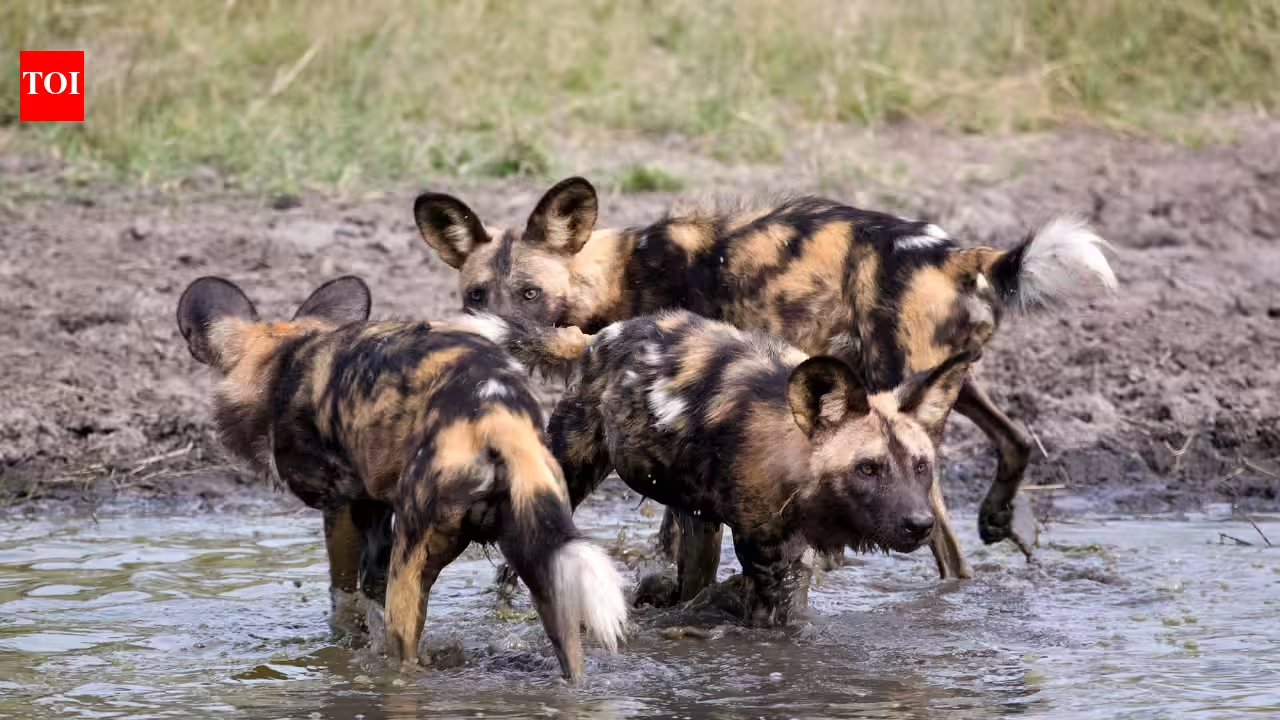
Three male African wild dogs from Kafue National Park traversed 4,126 kilometres across Zambia over eight months, marking the longest recorded dispersal by an African mammal.
Three African wild dog brothers have completed a record-breaking journey across Zambia, covering a total path length of 4,126 kilometres after leaving their natal pack. According to research published in Ecology and reported by the Times of India Science Desk, this extraordinary trek represents the longest recorded dispersal by any African mammal.
The three males, approximately three years old, departed from the Mayukuyuku Pack in Kafue National Park in July 2025. They were among 19 pups from the pack that survived to adulthood. Their departure was part of a natural dispersal process, wherein young wild dogs leave their birth groups to search for unrelated animals and potentially form new breeding groups.
Researchers tracked the brothers using GPS collars as they moved across a complex landscape comprising protected areas, game management areas, roads, reservoirs, and cities. Interestingly, four females from the same Mayukuyuku Pack had dispersed roughly two weeks prior to the males, though their initial movements were much more limited. The three brothers instead embarked on an extensive eastward journey.
The route taken by the dogs was not a straight path between two protected zones. As they moved toward regions surrounding Kabwe, Kitwe, and Ndola, they altered their direction upon approaching urban areas rather than moving through the cities. Large reservoirs also forced them to change course, traveling around the water bodies before pressing eastward toward the Luangwa Valley ecosystem.
By November 2025, the brothers had already covered more than 2,300 kilometres from their original home range. They continued moving through the Luangwa Valley ecosystem before finally settling in a new range within the Luano Game Management Area, located near the top of the Great Rift Escarpment.
By April 1, 2026, GPS records confirmed that the dogs had traveled a cumulative path length of 4,126 kilometres since leaving their birth pack. Researchers noted that while the actual path length reached 4,126 kilometres, the maximum straight-line distance between the start and end points of their journey was 419 kilometres, demonstrating the extensive detours required to navigate obstacles.
The study was led by Scott Creel of Montana State University, alongside collaborators from the Zambian Carnivore Programme and other institutions. The findings provide critical insight into the challenges African wild dogs face while moving through increasingly fragmented habitats.
Dispersal plays a vital role in the social structure and genetic health of African wild dogs, allowing individuals to find unrelated mates and maintain connections between separate populations. However, researchers point out that such lengthy movements do not guarantee successful population connectivity, as animals can travel vast distances without ultimately joining another group or producing offspring.
One of the most significant takeaways from the journey is the variety of human-influenced landscapes the dogs crossed. Traveling outside protected areas exposes wild dogs to numerous risks, including vehicle collisions on roads, potential conflicts with people in livestock areas, and injuries or deaths caused by wire snares used for bushmeat hunting.
Discover Wildlife highlighted the journey as a prime example of how wildlife uses landscapes in ways that do not align with boundaries drawn on conservation maps. While national parks offer safe havens, dispersing animals still need to navigate the unprotected spaces between them.
The observations confirm that African wild dogs can traverse major wildlife areas in Zambia despite human settlements and physical barriers. Ultimately, the brothers established themselves in the Luano Game Management Area, illustrating that lands outside national parks can actively support wildlife movement and corridor connectivity.
Conservationists suggest that records of such vast dispersals underscore the necessity of looking beyond individual park boundaries. Maintaining and protecting wildlife corridors ensures that wide-ranging species like African wild dogs have safe pathways to travel, reducing the risk of isolation within confined protected habitats.
Topic coverage
Follow recurring subjects across the WORLD PULSE newsroom.
Topics
Reader interest
Most read
 UKKelsey Parker Welcomes New Baby Named River Following Heartbreaking Stillbirth
 AIOpenAI Discloses New Safety Issues and Outlines Plan for Tracking Incidents
 SportsAsian Games Facing Accommodation Crisis and Weather Disruptions in Nagoya, Japan
More from the newsroom
Latest stories
 UKUK Defence Secretary Wes Streeting Urges Public Preparation for Cyber, Climate and Supply Chain Emergencies
 USAFederal Charges Filed Against Virginia State Senator L. Louise Lucas in Alleged Racketeering Scheme
 WorldRising Islamophobia and the Democratic Response to Attacks on Muslim Candidates
 ScienceGlobal Biodiversity Fund Faces Criticism as Pharmaceutical Contributions Stagnate at $7,000
 TechnologyMemphis City Council Rejects One-Year Data Center Moratorium in Favor of 135-Day Halt
 WorldDiplomatic and Military Developments in the Middle East: Iran, Russia, and Regional Security Updates
 WorldRubio Denounces Ukraine’s Claims of Withdrawn U.S. Support as ‘Scandalous’ Amid Oslo Diplomacy
 USATrump Administration Proposes Tying Federal Transit Funding to Local Birth and Marriage Rates
Research & context
Explore WORLD PULSE reference pages
Use these newsroom indexes to follow related coverage, review publication timelines and explore how WORLD PULSE reporting is organized.
Sources & attribution
The external reports, announcements or publications used to inform this article are listed here for attribution and reader context. A source link does not mean WORLD PULSE independently endorses every claim in that source.
Questions about sourcing, attribution or corrections: contact the newsroom.
