Pakistan and China Activate Joint Boundary Commission, Drawing Strong Rejection From India
World Pulse Editorial — The WORLD PULSE editorial team covers international news, business, technology, AI, science, sport, culture and other subjects of public interest. The desk applies source attribution, editorial checks, context and corrections standards across the publication.
The byline identifies the newsroom author or editorial team responsible for this publication. Where the story is based on external reporting, those sources are identified below.
AI-assisted production may have been used in the drafting workflow. Source verification, attribution and editorial review remain the responsibility of WORLD PULSE.
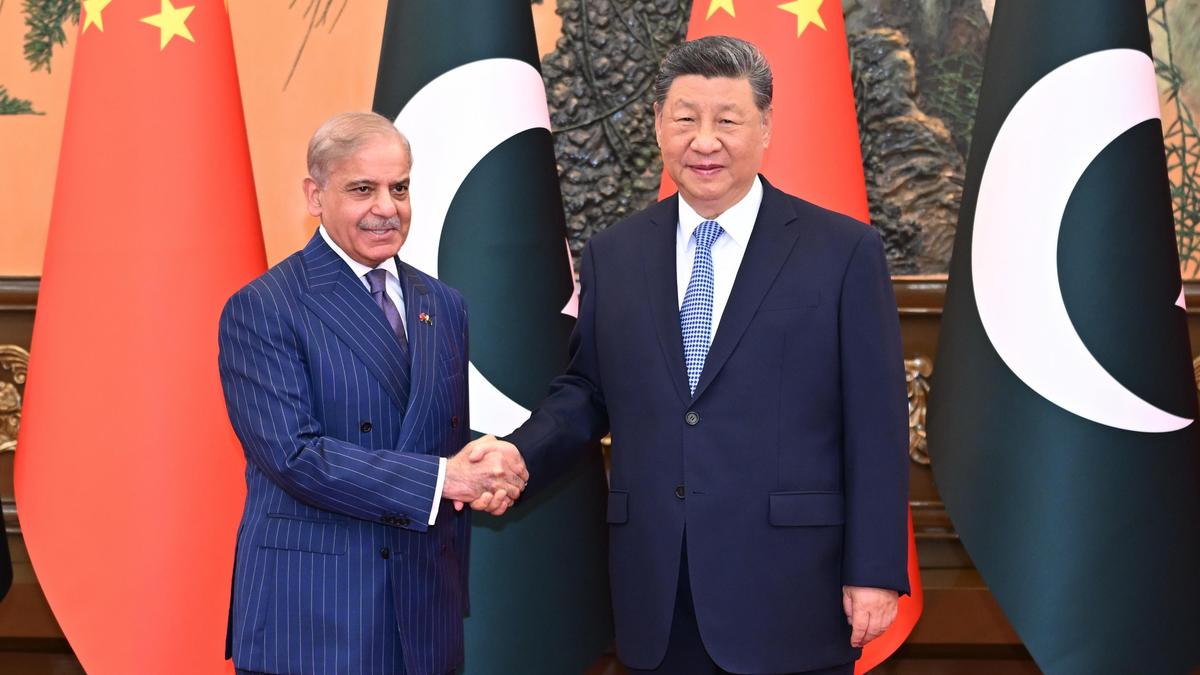
Pakistan and China have operationalised a joint commission to manage their shared border, prompting a firm rejection from India over arrangements involving disputed territory.
Pakistan and China have formally operationalised a joint mechanism for managing their common border, holding the inaugural meeting of the new commission at the Ministry of Foreign Affairs in Islamabad. The session took place on September 17, following the framework established by the 2013 Agreement on the Boundary Management System. According to the Pakistani Foreign Office, the newly activated body aims to streamline bilateral border administration between the two nations.
The development quickly drew a sharp reaction from New Delhi. India officially rejected the establishment of the boundary joint commission, asserting that the body possesses no legal basis to make decisions or handle arrangements concerning Indian territory under illegal occupation. Indian authorities have long maintained a consistent position regarding the region, reiterating that Pakistan's transfer of territories such as the Shaksgam Valley to China in 1963 was entirely illegal and unacceptable.
Furthermore, New Delhi has consistently opposed infrastructure and economic initiatives tied to the region, including portions of the China-Pakistan Economic Corridor, parts of which traverse Pakistan-occupied Kashmir. The core of New Delhi's objection rests on sovereignty and the legal status of territories involved in bilateral arrangements between Islamabad and Beijing.
Addressing the media following the announcement, Foreign Office spokesperson Sajjad Haider Khan dismissed Indian concerns regarding both the new border mechanism and the historical 1963 border agreement. Khan defended the 1963 accord, describing it as a valid arrangement concluded between Pakistan and China. He additionally emphasized the broader geopolitical relationship between the two countries, characterizing China as an all-weather strategic corporate partner and noting that their ties have proven robust over time.
In his remarks, Khan also touched on the broader political context of the region, reiterating Islamabad's stance that Jammu and Kashmir remains an internationally recognized disputed territory. He stated that the final disposition of the region should be determined in accordance with relevant United Nations Security Council resolutions and the aspirations of the Kashmiri people.
Beyond the immediate border management framework, bilateral engagements in Islamabad also focused on expanding internal security cooperation. Pakistan and China reached agreements aimed at enhancing collaboration through police training exchange programs, as well as incorporating modern technology and equipment into their security frameworks.
Interior Minister Mohsin Naqvi highlighted the potential benefits of this technological partnership, noting that advanced artificial intelligence-based technology and modern equipment from China could significantly aid Pakistan in addressing complex security challenges. Naqvi expressed a strong desire by Islamabad to further broaden and deepen cooperation with Beijing across various facets of internal security.
The activation of the joint boundary commission marks a significant step in institutionalizing administrative arrangements along the Pakistan-China frontier. However, the move simultaneously highlights ongoing regional tensions and divergent legal interpretations regarding sovereignty and territorial control in South Asia, particularly concerning longstanding disputes involving India, Pakistan, and China. As both nations continue to implement the provisions of the 2013 agreement and expand their internal security cooperation, the diplomatic friction generated by the commission underscores the complex geopolitical landscape surrounding the shared border.
Topic coverage
Follow recurring subjects across the WORLD PULSE newsroom.
Topics
Reader interest
Most read
 UKKelsey Parker Welcomes New Baby Named River Following Heartbreaking Stillbirth
 AIOpenAI Discloses New Safety Issues and Outlines Plan for Tracking Incidents
 SportsAsian Games Facing Accommodation Crisis and Weather Disruptions in Nagoya, Japan
More from the newsroom
Latest stories
 UKUK Defence Secretary Wes Streeting Urges Public Preparation for Cyber, Climate and Supply Chain Emergencies
 USAFederal Charges Filed Against Virginia State Senator L. Louise Lucas in Alleged Racketeering Scheme
 WorldRising Islamophobia and the Democratic Response to Attacks on Muslim Candidates
 ScienceGlobal Biodiversity Fund Faces Criticism as Pharmaceutical Contributions Stagnate at $7,000
 TechnologyMemphis City Council Rejects One-Year Data Center Moratorium in Favor of 135-Day Halt
 WorldDiplomatic and Military Developments in the Middle East: Iran, Russia, and Regional Security Updates
 WorldRubio Denounces Ukraine’s Claims of Withdrawn U.S. Support as ‘Scandalous’ Amid Oslo Diplomacy
 USATrump Administration Proposes Tying Federal Transit Funding to Local Birth and Marriage Rates
Research & context
Explore WORLD PULSE reference pages
Use these newsroom indexes to follow related coverage, review publication timelines and explore how WORLD PULSE reporting is organized.
Sources & attribution
The external reports, announcements or publications used to inform this article are listed here for attribution and reader context. A source link does not mean WORLD PULSE independently endorses every claim in that source.
Questions about sourcing, attribution or corrections: contact the newsroom.
